


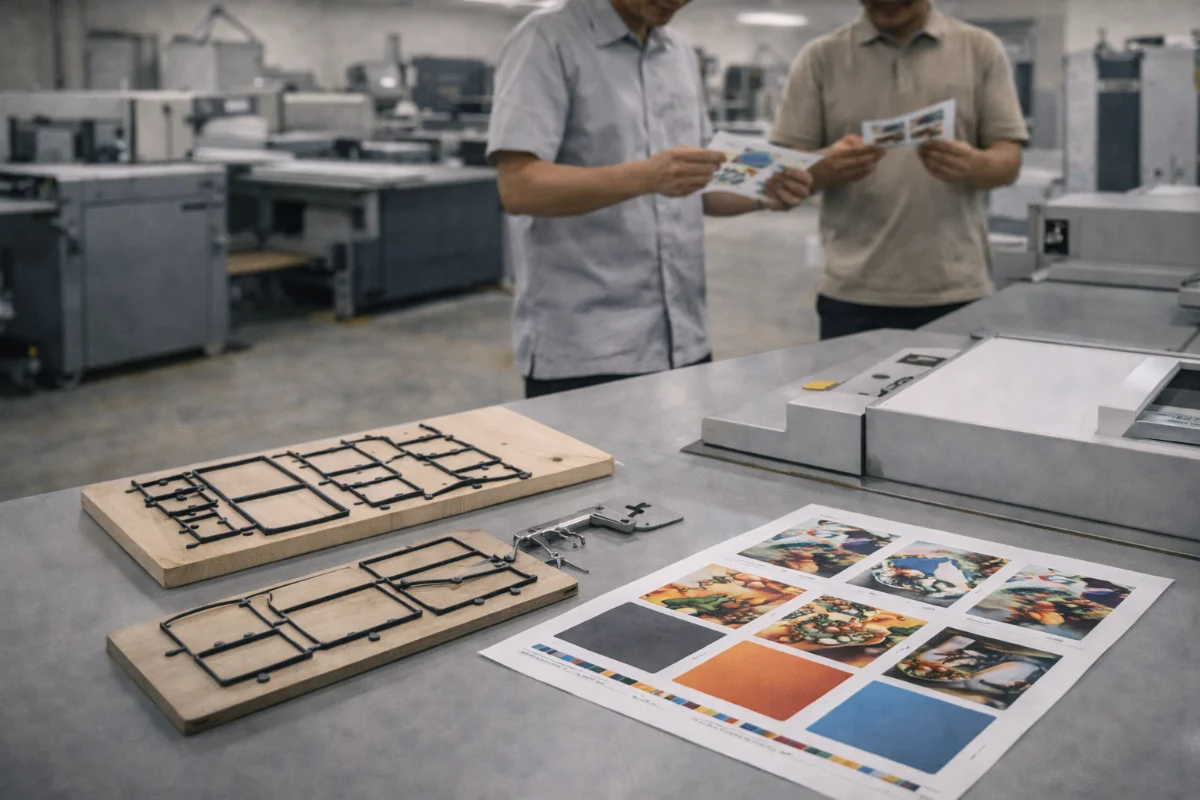
What “Special Tooling” Means in Printing #
Special tooling refers to custom-made physical components used to achieve specific finishing or production effects in printing. Unlike standard cutting or folding equipment, these tools are fabricated specifically for a project and tailored to its design.
Common examples include:
-
Die-cut moulds
-
Embossing or debossing dies
-
Hot stamping plates
-
Creasing rules
-
Custom cutting jigs
Tooling allows printers to produce shapes, textures, and finishes that cannot be created through standard trimming or folding processes.
Why Tooling Is Necessary #
Tooling is required when a project involves:
-
Non-standard shapes
-
Precision cut-outs
-
Raised or recessed textures
-
Foil stamping in custom layouts
-
Complex creasing patterns
-
Packaging structures
These effects rely on physical contact between metal or composite tools and the printed sheet, making bespoke fabrication unavoidable.
Common Types of Tooling #
Die-Cut Moulds #
Die-cut moulds consist of sharpened blades mounted in shaped boards to cut paper into custom outlines. They are used for:
-
Stickers
-
Folders
-
Packaging
-
Hang tags
-
Shaped cards
Each design requires its own mould.
Embossing and Debossing Dies #
These are paired metal plates that press paper fibres upward or downward to create texture.
They are used for:
-
Logos
-
Seals
-
Titles
-
Decorative patterns
Paper thickness and fibre structure affect the result.
Foil Stamping Plates #
Foil stamping uses heated plates to transfer metallic or pigmented foil onto paper. Custom plates are required for each artwork design.
Creasing Tools #
Complex folding patterns may need custom creasing rules to prevent cracking, especially on thick stocks or laminated sheets.
How Tooling Affects Cost #
Tooling adds cost because:
-
Tools must be fabricated
-
Materials are specialised
-
Skilled technicians are required
-
Setup time increases
-
Storage and reuse may be needed
Tooling is usually a one-time charge per design, but modifications or new artwork typically require new tools.
Impact on Lead Time and Scheduling #
Fabricating tooling takes time, often several business days depending on complexity.
Production schedules must account for:
-
Tool manufacture
-
Testing and calibration
-
Trial runs
-
Adjustments
-
Approval stages
Because of this, tooling-based projects almost always fall under RFQ workflows rather than instant pricing.
Reuse and Storage of Tooling #
Some tools can be stored and reused for repeat jobs, provided the artwork and specifications remain unchanged. However:
-
Storage periods may be limited
-
Tools can degrade
-
Reuse must be confirmed
-
Modifications usually require new fabrication
Customers planning recurring campaigns often benefit from keeping designs consistent.
When Tooling Is Not Required #
Tooling is typically unnecessary for:
-
Straight cuts
-
Standard folds
-
Simple trimming
-
Digital-only finishing
-
Common sticker shapes already stocked
Using standard options avoids extra cost and shortens lead times.
How to Decide If Your Project Needs Tooling #
Projects usually require tooling when they include:
-
Custom shapes
-
Decorative cut-outs
-
Raised textures
-
Metallic foils
-
Edge-specific finishing
-
Structural packaging elements
If unsure, submitting artwork for technical review allows production teams to confirm whether tooling is needed.
Summary #
Special tooling enables advanced finishes and custom shapes but introduces additional cost and lead time. Die-cut moulds, embossing dies, and foil plates must be fabricated specifically for each design, which is why these projects are handled through RFQ processes.
Understanding tooling requirements helps businesses plan budgets and schedules more accurately.


