


Why Printing Services Are Categorised #
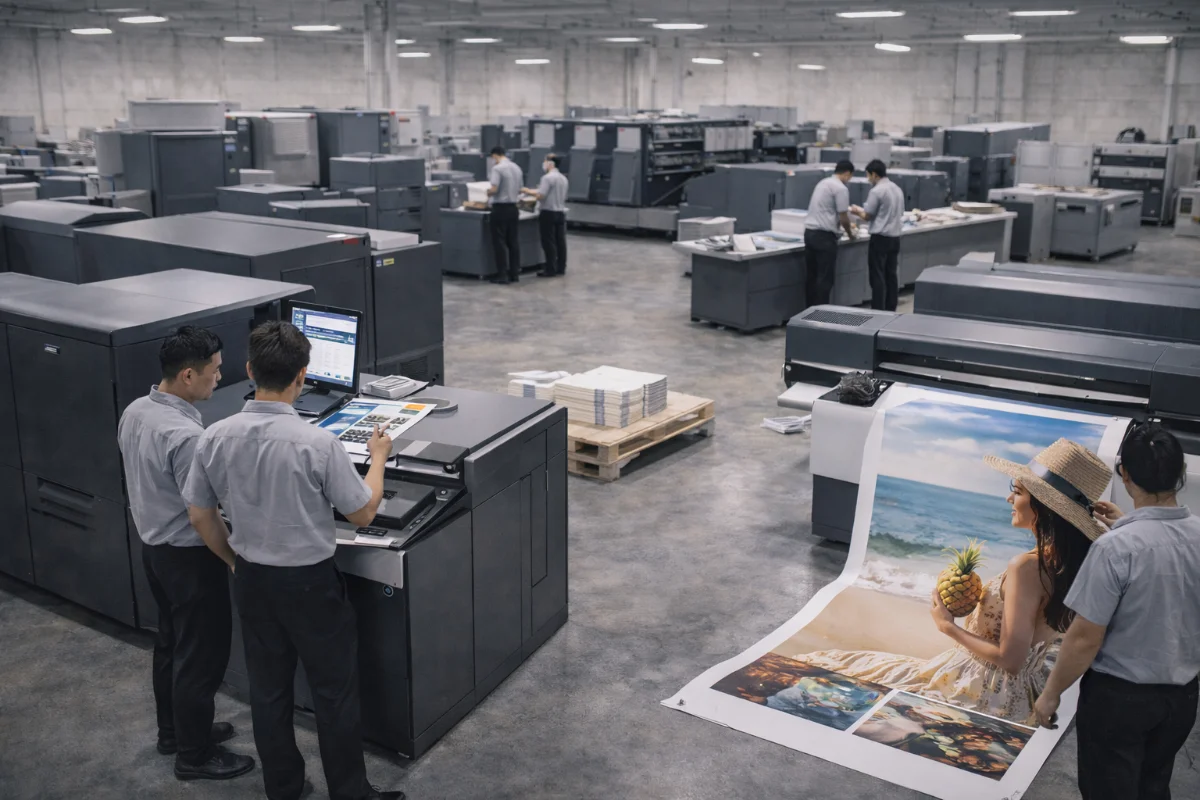
Commercial printing covers a wide range of technologies, workflows, and finishing capabilities. These services are categorised to help businesses select the most efficient production method based on quantity, turnaround time, quality expectations, and material requirements.
Understanding the differences between printing services reduces the risk of overpaying for a method that is not required or choosing one that cannot meet technical needs.
Digital Printing #
What It Is #
Digital printing uses toner-based or inkjet presses to print directly from digital files without metal plates. Files are sent to the press almost immediately after approval.
When It Is Used #
Digital printing is commonly chosen for:
-
Short to medium runs
-
Fast turnaround
-
Variable data printing
-
Prototypes or test prints
-
On-demand reorders
Advantages #
-
Minimal setup cost
-
Rapid production start
-
Personalisation capabilities
-
Suitable for urgent jobs
Limitations #
-
Higher unit cost at large volumes
-
Certain paper stocks may be limited
-
True spot colours may be simulated rather than printed with separate inks
Offset Printing #
What It Is #
Offset printing transfers ink from metal plates onto paper via rubber blankets. It requires significant setup but excels at long-run consistency.
When It Is Used #
Offset is commonly used for:
-
High-volume brochures
-
Catalogues
-
Magazines
-
Corporate stationery
-
Packaging components
Advantages #
-
Low per-unit cost at scale
-
Excellent colour control
-
Broad paper compatibility
-
Ability to use spot inks
Limitations #
-
Higher initial setup cost
-
Longer lead times
-
Less economical for short runs
Large Format Printing #
What It Is #
Large format printing produces oversized graphics such as banners, posters, and display boards using wide-format inkjet equipment.
When It Is Used #
Large format is suitable for:
-
Event signage
-
Retail displays
-
Exhibition panels
-
Hoardings
-
Window graphics
Advantages #
-
Supports oversized dimensions
-
Variety of substrates
-
Indoor and outdoor applications
-
High-impact visuals
Limitations #
-
Slower finishing and mounting stages
-
Higher material costs
-
Transport considerations
Screen Printing #
What It Is #
Screen printing pushes ink through a mesh stencil onto a surface. It is used for specific substrates and special effects.
When It Is Used #
Screen printing is commonly used for:
-
Posters
-
Packaging
-
Apparel
-
Specialty materials
Advantages #
-
Thick ink coverage
-
Vibrant colours
-
Durable results
Limitations #
-
Labour intensive
-
Setup costs apply
-
Not suitable for short-run personalisation
Specialty and Finishing Services #
In addition to core print methods, many projects require specialty services such as:
-
Die-cutting
-
Spot UV
-
Foil stamping
-
Embossing
-
Lamination
-
Perfect binding
These are often combined with digital or offset printing to achieve final presentation and durability goals.
Choosing the Right Service for Your Project #
Selecting a printing service depends on:
-
Quantity
-
Deadline
-
Colour accuracy requirements
-
Paper stock
-
Finishing complexity
-
Personalisation needs
-
Budget
Projects that fall outside standard configurations are typically routed through RFQ for technical review.
Summary #
Printing services include digital, offset, large format, screen, and specialty finishing processes. Each is suited to different volumes, timelines, and quality requirements.
Understanding these categories helps businesses choose the most appropriate method and plan production realistically.


