


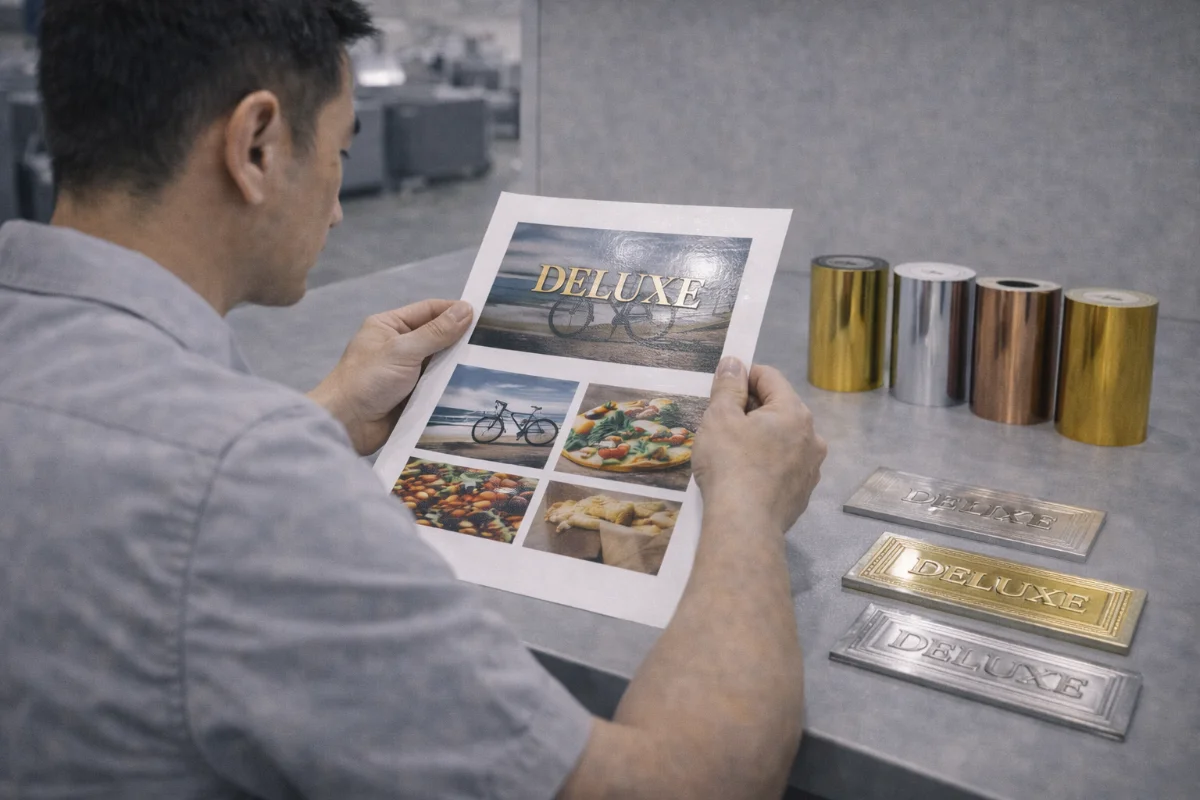
What Foil Stamping Is #
Foil stamping—sometimes called hot stamping—is a finishing process that transfers a thin metallic or pigmented foil onto paper using heat and pressure. A custom metal plate presses the foil onto specific areas of the printed sheet, bonding it permanently to the surface.
Unlike metallic inks, foil stamping does not rely on ink pigments. The reflective effect comes from the foil material itself, which produces a high-impact shine that cannot be replicated accurately with CMYK printing.
Foil stamping is widely used for premium branding applications such as:
-
Name cards
-
Packaging
-
Folder covers
-
Invitations
-
Certificates
-
Luxury brochures
Because it requires specialised tooling and additional production stages, foil stamping is considered a high-end enhancement.
Types of Metallic and Pigmented Foils #
Foils come in a wide variety of finishes, including:
-
Gold and silver
-
Rose gold
-
Copper
-
Holographic
-
Matte metallic
-
Gloss metallic
-
Solid colours (white, black, red, etc.)
Metallic foils are reflective, while pigmented foils provide flat colour effects without shine. Selection depends on visual goals, substrate, and design intent.
How the Foil Stamping Process Works #
The production workflow generally involves:
-
Creating a metal stamping plate based on the artwork.
-
Printing the base design first.
-
Aligning the sheet on the stamping press.
-
Heating the plate and pressing it with foil onto the paper.
-
Removing excess foil.
-
Inspecting for alignment and adhesion.
Because foil stamping is a separate pass from printing, it introduces additional alignment considerations and scheduling requirements.
Artwork Setup Requirements #
Foil stamping requires precise artwork preparation. Files should include:
-
A separate vector layer indicating foil areas
-
Solid fills only (no gradients unless approved)
-
Clear naming for foil layers
-
Adequate clearance from trim edges
-
No rasterised masks
-
Avoidance of hairline strokes
Foil elements should be large enough to transfer cleanly. Extremely fine lines, small text, or dense patterns may not reproduce well.
Design and Production Limitations #
Foil stamping is subject to production tolerances and physical constraints.
It is generally unsuitable for:
-
Border-to-edge foiling
-
Tight frames around pages
-
Very thin outlines
-
Micro text
-
Large solid areas without testing
-
Areas extremely close to trim edges
Because sheets may shift slightly between printing and stamping, perfect edge alignment cannot be guaranteed.
Interaction With Paper and Lamination #
Paper choice affects foil adhesion:
-
Smooth coated stocks usually accept foil well.
-
Textured papers may produce broken edges or uneven coverage.
-
Recycled stocks can vary due to fibre content.
Foil is commonly applied after lamination—especially matte or soft-touch—because the smooth surface improves transfer and contrast. However, not all laminates are compatible, and testing may be required.
Cost and Turnaround Implications #
Foil stamping adds cost for several reasons:
-
Custom metal plates must be produced.
-
Setup and calibration time increases.
-
Additional production passes are required.
-
Extra quality checks are performed.
Lead time is also extended due to plate fabrication and scheduling.
For high volumes, tight registration requirements, or complex layouts, foil stamping jobs are usually routed through RFQ rather than instant pricing.
Foil Stamping vs Metallic Inks #
Metallic inks contain reflective pigments and are printed like standard inks.
They:
-
Are less shiny than foil
-
Can be used in offset runs
-
May not achieve mirror-like finishes
-
Are affected by paper absorbency
Foil stamping produces a stronger visual impact but at higher cost and complexity.
When Foil Stamping Is Appropriate #
Foil stamping is best used when:
-
Premium appearance is required
-
Brand positioning demands visual impact
-
Limited areas are being highlighted
-
Quantities justify setup cost
-
Schedules allow additional lead time
It may not be suitable for low-budget projects or ultra-fast turnaround requirements.
Best Practices for Successful Foil Projects #
To reduce risk:
-
Keep foil areas simple and bold
-
Avoid ultra-thin lines
-
Allow clearance from edges
-
Specify paper and lamination early
-
Request proofing for critical designs
-
Consolidate changes before plate fabrication
These steps prevent rework and rescheduling.
Summary #
Foil stamping creates distinctive metallic effects using heat, pressure, and custom plates. It adds premium appeal but introduces additional cost, lead time, and technical constraints.
Understanding artwork rules, substrate compatibility, and production tolerances helps businesses plan foil projects realistically and avoid unexpected delays.


