


Why Colour Shift Happens #
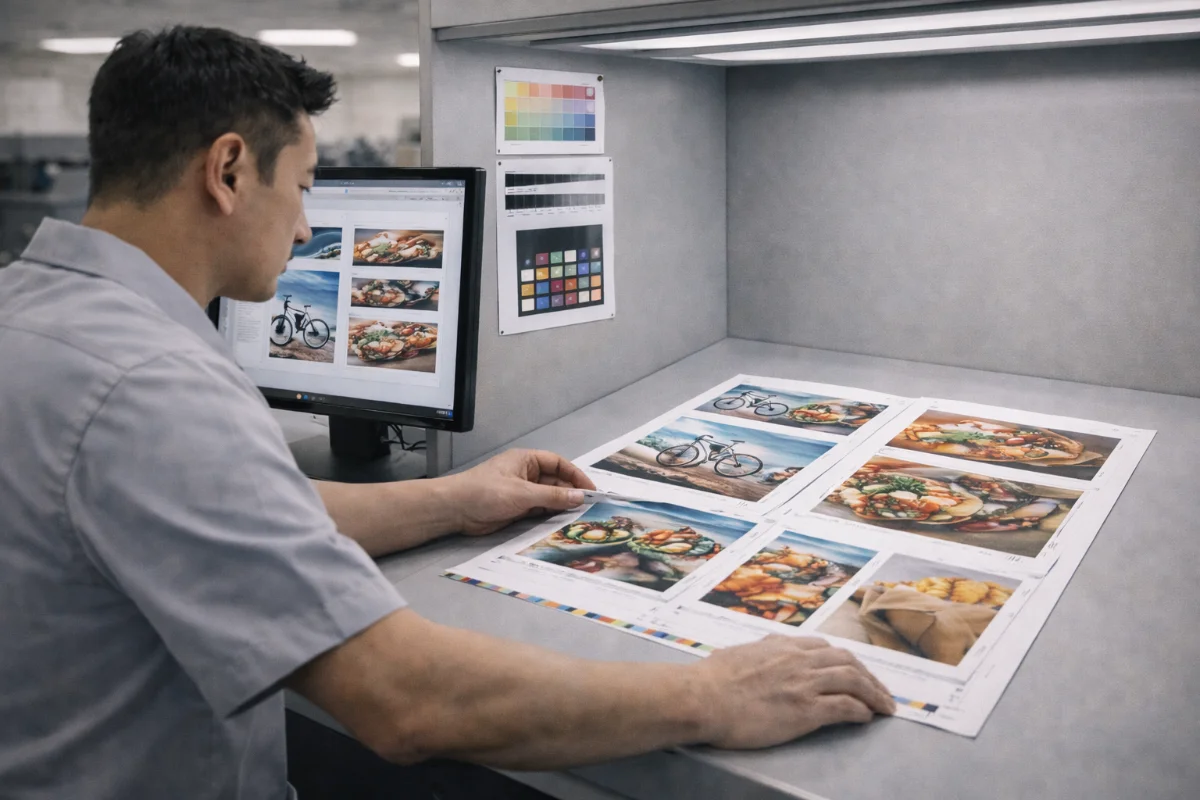
Colour shift refers to the difference between how colours appear on screen and how they appear in the final printed piece. This is one of the most common concerns in commercial printing and arises because screens emit light while printed inks reflect light from paper.
Other factors such as paper texture, ink absorption, press calibration, and finishing processes further influence how colours are perceived.
Understanding these causes helps set realistic expectations and allows designers to reduce unwanted variation.
RGB vs CMYK Colour Models #
Most screens display colour using the RGB model, which mixes red, green, and blue light. Printing relies primarily on CMYK inks: cyan, magenta, yellow, and black.
RGB can display a wider range of bright colours than CMYK. When artwork created in RGB is converted for printing, some colours — particularly neon greens, vivid blues, and intense oranges — may shift or appear less saturated.
Proper colour conversion is essential to minimise surprises.
Paper and Substrate Effects #
Paper plays a significant role in colour reproduction.
-
Coated stocks reflect more light and produce vibrant colours.
-
Uncoated stocks absorb ink, resulting in softer tones.
-
Textured papers can reduce sharpness and saturation.
-
Recycled papers may introduce slight colour variation due to fibre content.
Selecting paper with colour goals in mind is critical.
Finishing Processes and Their Impact #
Finishing can alter colour appearance even after printing:
-
Lamination often deepens colours.
-
Matte coatings reduce glare and contrast.
-
Spot UV increases perceived richness.
-
Foil stamping introduces reflective elements.
Because of this, colour-critical jobs should be proofed with finishing applied whenever possible.
Press Calibration and Consistency #
Presses are calibrated regularly to maintain consistent output, but minor variation is still normal.
Digital presses maintain stable results across short runs, while offset presses allow fine ink adjustment over longer runs.
Humidity, temperature, and run length can also influence colour density.
Viewing Conditions Matter #
Colour perception changes depending on lighting:
-
Warm indoor lighting can make prints appear yellow.
-
Cool lighting can introduce a bluish cast.
-
Daylight-balanced lighting provides the most neutral evaluation.
For accurate review, prints should be assessed under standardised lighting conditions rather than mixed office lighting.
How to Reduce Colour Shift #
Practical steps include:
-
Design in CMYK when preparing print files.
-
Use appropriate ICC profiles.
-
Avoid ultra-saturated RGB colours.
-
Request proofs for colour-critical projects.
-
Specify paper and finishing early.
-
Calibrate monitors if colour accuracy is important.
-
Use spot colours for brand-critical hues.
-
Avoid last-minute conversions.
These measures significantly reduce unpredictable outcomes.
When to Request Proofing #
Proofing is especially important when:
-
Brand colours must match closely.
-
Campaigns involve large quantities.
-
Special paper or finishes are used.
-
Multiple stakeholders require approval.
-
Packaging is being produced.
Hard proofs provide the most reliable preview of final appearance.
Common Misunderstandings About Colour Accuracy #
Some expectations are unrealistic in physical printing:
-
Screens and prints cannot match perfectly.
-
Edge-to-edge solids may vary slightly.
-
Reprints on different stocks may look different.
-
Different press runs may show minor shifts.
Understanding these realities helps avoid disputes and reprints.
Summary #
Colour shift is a natural result of converting digital designs into physical prints. Paper type, finishing, lighting, and press calibration all influence the final appearance.
By preparing files correctly, selecting suitable materials, and using proofing strategically, businesses can minimise variation and achieve more predictable results.


