


Why Paper Choice Matters in Printing #
Paper is not just a carrier for ink — it directly influences colour appearance, sharpness, texture, durability, and how a printed piece is perceived.
Two of the most common paper categories in commercial printing are coated and uncoated stocks. Understanding how they differ helps businesses choose materials that match their visual goals, budget, and intended use.
Selecting the wrong paper type can result in colours looking dull, surfaces scuffing easily, or text appearing less crisp than expected.
What Coated Paper Is #
Coated paper has a surface layer applied during manufacturing to fill in paper fibres and create a smoother finish. This coating limits ink absorption and allows pigments to sit closer to the surface.
Common coating styles include:
-
Gloss
-
Matte
-
Silk or satin
These finishes differ in sheen but share similar technical properties.
Benefits of Coated Paper #
Because ink remains on the surface, coated paper typically delivers:
-
Sharper image detail
-
Higher contrast
-
More saturated colours
-
Cleaner fine lines
-
Better reproduction of photographs
For this reason, coated stocks are widely used for marketing materials and image-heavy designs.
Limitations of Coated Paper #
Coated surfaces also have trade-offs:
-
More reflective under strong lighting (especially gloss)
-
Can show fingerprints
-
Less absorbent for handwriting
-
May scuff if unlaminated
-
Often slightly higher cost
For materials that will be written on, such as forms or notepads, coated stocks may be unsuitable unless specific writable coatings are used.
What Uncoated Paper Is #
Uncoated paper has a more natural surface with exposed fibres. Ink is absorbed into the sheet rather than sitting on top.
Common examples include:
-
Copier paper
-
Letterhead stock
-
Book paper
-
Textured or natural-finish papers
Uncoated stocks are frequently chosen for stationery and editorial products.
Benefits of Uncoated Paper #
Uncoated paper offers:
-
A softer, tactile feel
-
Reduced glare
-
Good writability
-
A more natural or premium impression in some designs
-
Lower cost in many cases
Text-heavy documents often benefit from uncoated paper because it is easier to read under bright lighting.
Limitations of Uncoated Paper #
Because ink absorbs into the fibres, uncoated stocks may show:
-
Slightly muted colours
-
Lower contrast
-
Reduced sharpness in photographs
-
Ink spread on very porous papers
Designers often compensate by adjusting colour values or increasing contrast.
How Each Affects Colour Reproduction #
Colour appearance is one of the biggest differences between coated and uncoated stocks.
-
Coated paper produces vibrant colours and deep blacks.
-
Uncoated paper softens tones and can make colours appear lighter.
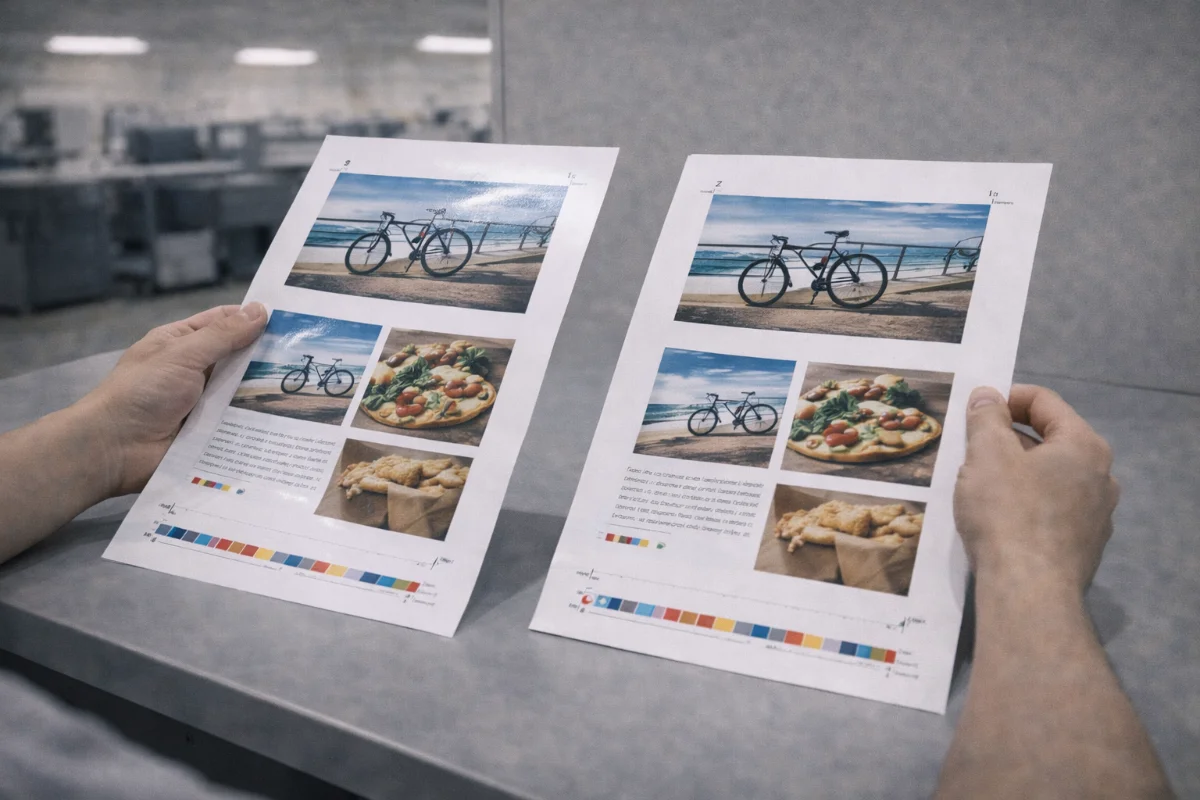
The same artwork printed on both stocks will not look identical. For colour-critical projects, proofs on the selected paper type are recommended.
Durability and Handling Considerations #
Coated papers resist dirt slightly better but may scratch or scuff without lamination.
Uncoated papers are more forgiving for handling but can absorb moisture or oils more readily.
If printed pieces will be mailed, handled frequently, or used outdoors briefly, additional finishing such as lamination may be appropriate regardless of stock choice.
Typical Use Cases #
Coated Paper Is Commonly Used For: #
-
Flyers and brochures
-
Posters
-
Catalogues
-
Marketing leaflets
-
Product sheets
Uncoated Paper Is Commonly Used For: #
-
Letterheads
-
Forms
-
Manuals
-
Notebooks
-
Books
-
Corporate stationery
These are guidelines rather than fixed rules — creative goals and brand positioning still play a role.
Interaction With Finishing Processes #
Some finishes behave differently depending on the paper surface.
-
Lamination works well on both but is more common on coated stocks.
-
Spot UV requires smooth surfaces and usually performs best on coated papers.
-
Foil stamping can be applied to both but may require testing on textured sheets.
-
Writing on laminated or heavily coated surfaces can be difficult.
Understanding these interactions helps avoid unexpected results.
How to Choose the Right Option #
When selecting between coated and uncoated paper, consider:
-
Image vs text emphasis
-
Need for writability
-
Lighting conditions
-
Handling and durability
-
Brand personality
-
Budget
-
Finishing requirements
If uncertain, requesting samples or proofs on both stocks can provide clarity.
Summary #
Coated and uncoated papers differ primarily in surface treatment, which affects colour vibrancy, sharpness, tactile feel, and usability.
Coated stocks suit image-driven marketing materials, while uncoated papers work well for stationery and reading-heavy documents.
Choosing the right paper early in the project helps ensure the finished print performs as intended.


