


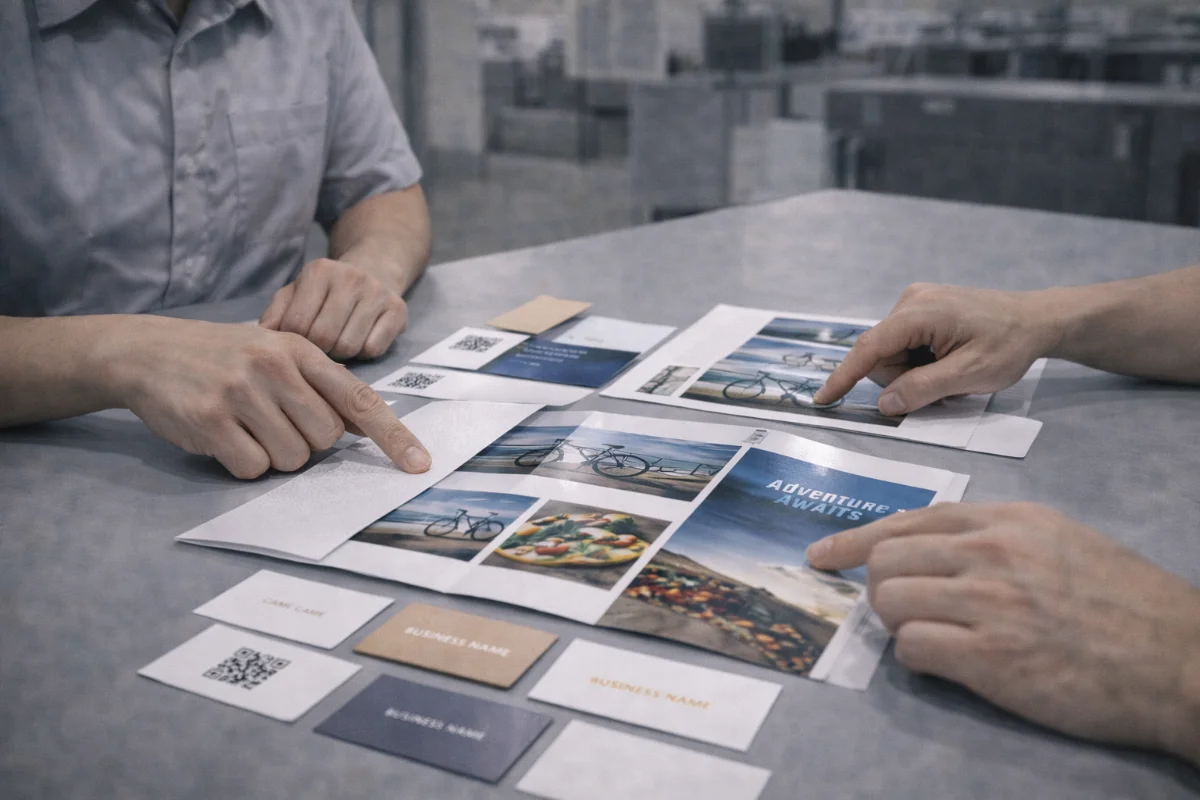
Why Finishing Matters #
Finishing processes transform printed sheets into polished, durable, and visually distinctive products. While printing determines colour and layout, finishing affects how a piece feels in the hand, how long it lasts, and how effectively it communicates a brand’s positioning.
Selecting the right finish is a balance between visual impact, practicality, cost, and production constraints. Not every project benefits from premium enhancements, and some designs perform better with simpler protective coatings.
Understanding what each finishing option offers helps businesses make informed decisions early in the planning stage.
Common Types of Finishing #
Commercial printing uses a wide range of finishes, including:
-
Lamination (gloss, matte, soft-touch)
-
Overall coatings
-
Spot UV
-
Foil stamping
-
Embossing and debossing
-
Die-cutting
-
Folding and binding
Each option serves different purposes and introduces different cost and scheduling implications.
Business Cards: Durability and Brand Impression #
Business cards are frequently handled, so protection and tactile quality are priorities.
Popular finishes include:
-
Matte or soft-touch lamination for a premium feel
-
Spot UV to highlight logos or names
-
Foil stamping for luxury positioning
Key considerations:
-
Avoid overly thin stocks
-
Leave clearance around edges for finishing
-
Keep Spot UV elements simple
-
Avoid edge-critical foil designs
For everyday networking cards, simple lamination may be sufficient. For executive or luxury brands, premium finishes can reinforce positioning.
Brochures and Catalogues: Readability and Longevity #
Brochures balance presentation with usability.
Common finishing choices include:
-
Gloss lamination for image-heavy covers
-
Matte lamination for corporate or editorial styles
-
Aqueous coating for light protection
-
Spot UV accents on covers only
Interior pages are often left uncoated to reduce cost and improve readability.
Designers should avoid finishes that make pages stick together or become too stiff to turn easily.
Flyers and Leaflets: Cost Efficiency #
Flyers are usually produced in large quantities and distributed quickly.
Typical finishes include:
-
No lamination
-
Light aqueous coating
-
Full-sheet UV coating for durability
Premium finishes are less common unless the flyer supports a high-end campaign.
Choosing Finishes for Marketing Campaigns #
Campaign materials may include multiple formats such as folders, postcards, and presentation booklets.
Consistency is important:
-
Use the same lamination type across pieces
-
Match Spot UV styles
-
Keep foil colours consistent
-
Maintain similar tactile impressions
This creates a cohesive brand experience.
How Finishing Affects Production and Turnaround #
Each finishing stage adds time:
-
Lamination requires drying or curing
-
Spot UV involves separate passes
-
Foil stamping needs plate fabrication
-
Embossing requires tooling
Jobs with multiple finishes are often routed through RFQ to allow technical review and scheduling.
Budget vs Impact Trade-Offs #
Premium finishes increase cost due to:
-
Extra materials
-
Labour
-
Tooling
-
Slower production speeds
For high-volume projects, even small per-unit increases add up. Deciding where finishes matter most — for example, covers only — helps control budgets.
Matching Finishes to Brand Positioning #
Finishes communicate subtle brand signals:
-
Gloss suggests energy and retail focus
-
Matte feels corporate and restrained
-
Soft-touch implies luxury
-
Foil indicates exclusivity
Selecting finishes that align with brand identity improves consistency across printed materials.
When to Request Technical Review #
Projects should be reviewed before committing to complex finishes when they involve:
-
Tight registration
-
Edge-to-edge effects
-
Multiple finishes
-
Recycled or textured stocks
-
High quantities
These situations are better handled through RFQ workflows.
Summary #
Choosing the right finish depends on product type, usage, brand positioning, budget, and production constraints.
Simple coatings provide protection, while premium finishes such as Spot UV and foil stamping add visual impact but require careful planning.
Early decisions and realistic expectations help ensure print projects run smoothly.


