
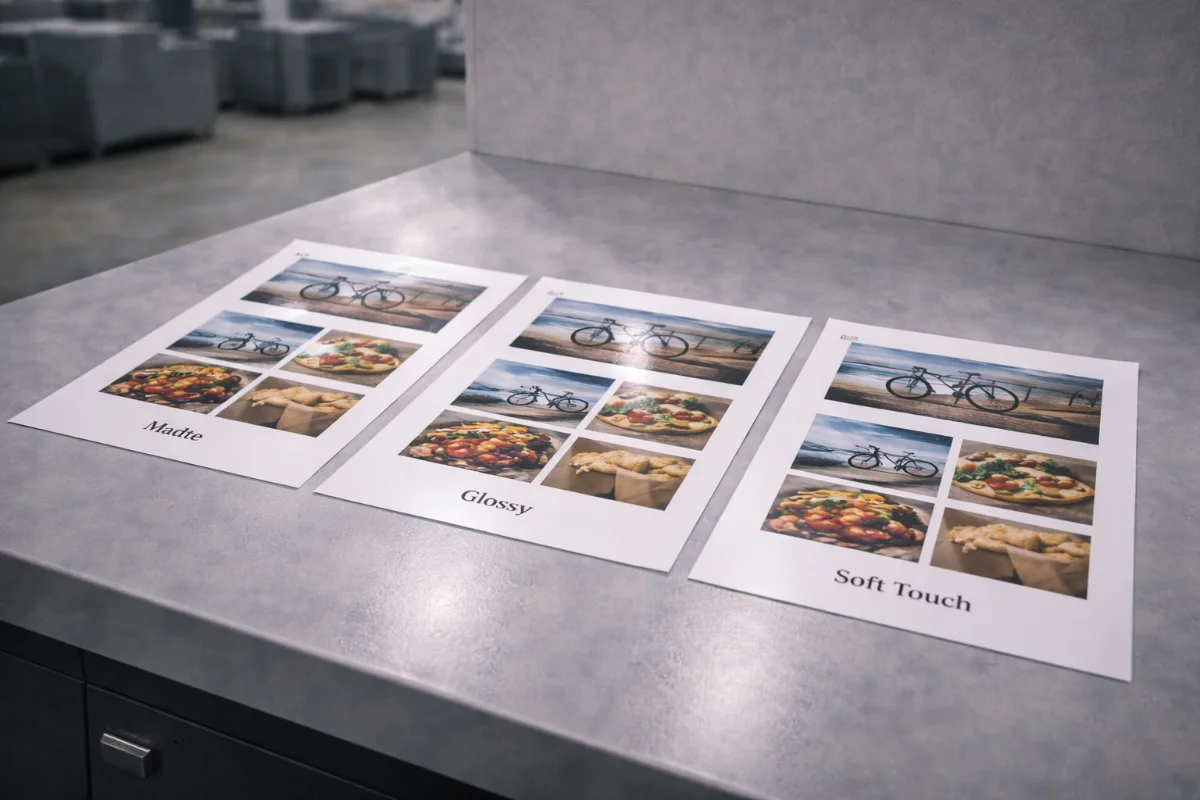
What Lamination Is in Printing #
Lamination is a finishing process in which a thin plastic film is bonded to the surface of printed sheets. It improves durability, protects against moisture and scuffing, and changes the visual and tactile feel of the final product.
Lamination is commonly applied to:
-
Business cards
-
Brochure covers
-
Menu cards
-
Posters
-
Packaging sleeves
-
Folders
Choosing the correct lamination type is important because each finish affects colour, glare, texture, and suitability for writing or stamping.
Why Lamination Is Used #
Lamination serves several functional purposes:
-
Increases resistance to tearing and moisture
-
Reduces scuffing and fingerprint marks
-
Adds stiffness to thin stocks
-
Improves longevity for frequently handled items
-
Enhances perceived quality
It can also be used for purely aesthetic reasons, such as creating a high-gloss look or a velvety surface.
Gloss Lamination #
What It Looks Like #
Gloss lamination produces a shiny, reflective surface that intensifies colours and contrast. Images appear vibrant, and blacks become deeper.
Common Uses #
Gloss lamination is often selected for:
-
Marketing flyers
-
Posters
-
Product brochures
-
Photo-heavy materials
-
Retail displays
Advantages #
-
Enhances colour saturation
-
High visual impact
-
Easy to wipe clean
-
Good moisture resistance
Limitations #
-
Reflective under bright lights
-
Shows fingerprints more easily
-
Can make long text harder to read
-
Not ideal for writing on
Matte Lamination #
What It Looks Like #
Matte lamination produces a smooth, low-sheen surface that reduces glare and creates a softer appearance.
Common Uses #
Matte lamination is popular for:
-
Corporate brochures
-
Annual reports
-
Premium stationery
-
Book covers
-
Menus
Advantages #
-
Reduced reflection
-
Professional, understated finish
-
Easier to read under lighting
-
Fingerprints are less visible
Limitations #
-
Colours appear slightly muted compared to gloss
-
Can scuff more easily unless treated
-
Less dramatic visual impact
Soft-Touch (Velvet) Lamination #
What It Feels Like #
Soft-touch lamination creates a velvety, rubber-like texture that feels luxurious to the touch. It is typically matte in appearance.
Common Uses #
Soft-touch finishes are used for:
-
Premium name cards
-
Luxury packaging
-
Brand presentation folders
-
High-end marketing collateral
Advantages #
-
Distinct tactile appeal
-
Premium look and feel
-
Reduces glare
-
Works well with Spot UV overlays
Limitations #
-
Higher cost than standard lamination types
-
Can show rub marks over time
-
Not ideal for writable surfaces
-
May require careful handling during finishing
How Lamination Affects Colour and Design #
Lamination alters colour perception:
-
Gloss deepens saturation and contrast
-
Matte softens tones
-
Soft-touch slightly darkens colours
Designers often adjust artwork slightly to compensate, especially for large solid areas.
Lamination can also affect fine details, so hairline strokes and subtle gradients should be reviewed carefully.
Interaction With Other Finishes #
Lamination frequently forms the base layer for additional finishes:
-
Spot UV is commonly applied over matte or soft-touch lamination for contrast.
-
Foil stamping adheres well to certain laminated surfaces but may require testing.
-
Embossing can be applied after lamination, depending on stock thickness.
Not all combinations are suitable, which is why complex finishing is often routed through RFQ.
Thickness and Stiffness Changes #
Lamination adds a thin layer of plastic that increases stiffness slightly. On lightweight papers, this can improve handling. On heavy stocks, it may make folding difficult unless creasing is applied.
Designers should consider lamination early, especially for folded or bound products.
Choosing the Right Lamination #
When selecting a lamination type, consider:
-
Lighting conditions
-
Image-heavy vs text-heavy layouts
-
Handling frequency
-
Desired tactile impression
-
Budget
-
Compatibility with other finishes
If unsure, requesting samples is the most reliable way to evaluate options.
Summary #
Gloss, matte, and soft-touch laminations each serve different visual and functional purposes.
Gloss maximises colour vibrancy, matte offers a professional low-glare look, and soft-touch provides a premium tactile finish.
Understanding how these laminations behave helps businesses select finishes that match their design goals and usage requirements.


