
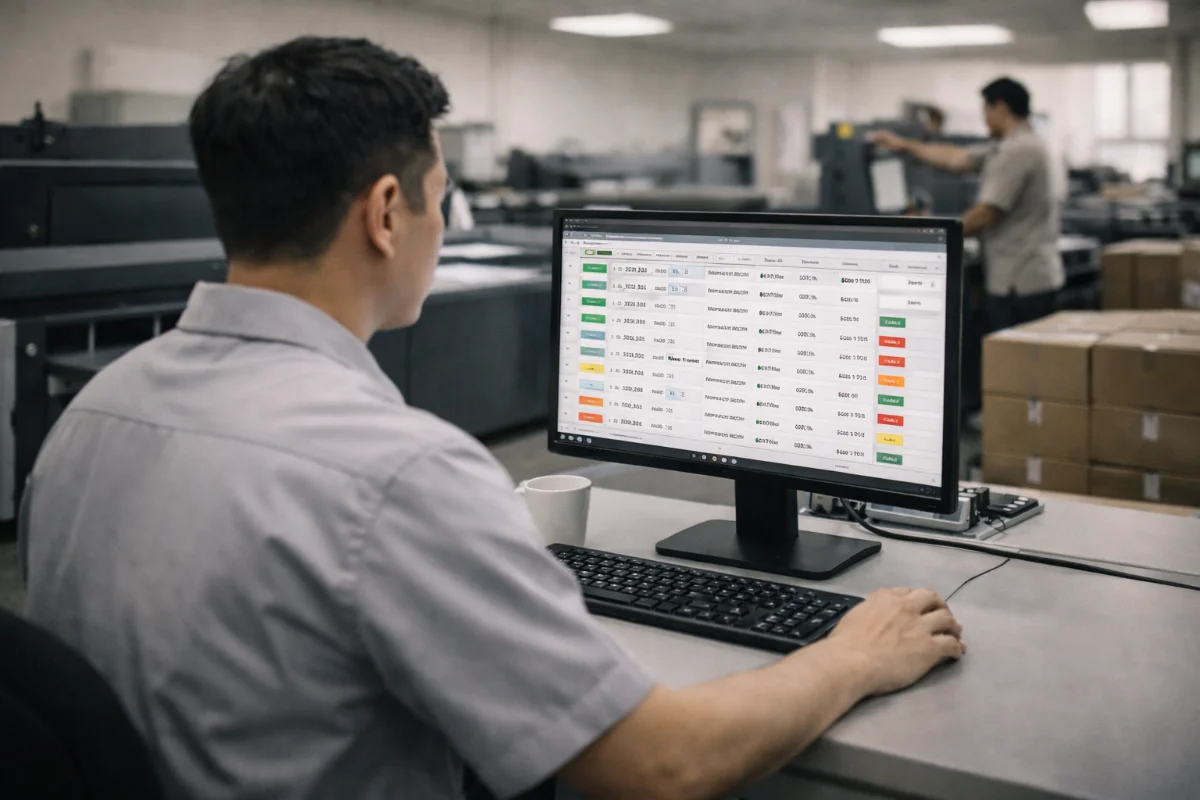
Why Payment Timing Matters in Print Production #
In commercial printing, production scheduling depends not only on artwork readiness but also on payment confirmation. Press time, materials, and finishing capacity are allocated only after financial clearance is in place.
This protects both operational planning and cost control, particularly for high-value jobs, customised specifications, or large-volume orders.
Understanding how payment status affects production start times helps prevent misunderstandings about turnaround expectations.
What “Payment Confirmation” Means #
Payment confirmation occurs when the payment processor, bank, or internal accounting system verifies that funds have been received or that account billing has been approved.
This may involve:
-
Instant card authorisation
-
Real-time wallet verification
-
Bank transfer receipt confirmation
-
Corporate account credit approval
-
Purchase order validation
Orders typically remain on hold until this step is completed.
How Payment Status Interacts With Cut-Off Times #
Daily cut-off times apply only when both artwork and payment are complete.
For example:
-
If artwork is approved before the cut-off but payment clears afterward, the job usually moves to the next production cycle.
-
If payment is confirmed but files are not ready, production cannot begin.
Both conditions must be satisfied for scheduling to proceed.
Payment Methods and Clearance Timing #
Different payment methods involve different processing times:
Instant Methods #
-
Credit or debit cards
-
Certain online payment wallets
These often confirm immediately and allow the order to move quickly into scheduling.
Bank Transfers #
-
May require manual verification
-
Can take hours or business days depending on banks
-
Proof of transfer may still need internal confirmation
Corporate Accounts #
-
Subject to credit limits and billing approval
-
May require purchase order references
-
Follow agreed invoicing terms
Understanding these differences helps with urgent projects.
RFQ-Based Jobs and Payment Rules #
Quotation-based projects usually follow a slightly different sequence:
-
Specifications are reviewed.
-
Pricing is confirmed.
-
Artwork is assessed.
-
Payment or purchase order is issued.
-
Production is scheduled.
Because RFQ jobs often involve tooling, special materials, or custom logistics, payment is normally required before procurement and production begin.
Deposits and Part Payments #
For certain projects, especially high-value or custom work, deposits may be required before production starts. The remaining balance may be due before dispatch.
These arrangements are typically communicated at quotation stage and must be honoured before scheduling proceeds.
Common Payment-Related Delays #
Delays can occur when:
-
Transfers are not clearly referenced
-
Proof of payment is incomplete
-
Currency conversions slow settlement
-
Credit approvals are pending
-
Additional charges arise after file review
-
Purchase orders are missing
Providing complete payment details and responding promptly to billing requests reduces these risks.
What Happens After Payment Is Confirmed #
Once payment is cleared:
-
The order is released into scheduling
-
Press time is allocated
-
Materials are reserved
-
Finishing slots are booked
-
Dispatch planning begins
At this point, the published turnaround timeline starts counting, subject to artwork approval status.
Changes After Payment #
If specifications change after payment has been made, the job may need to be re-evaluated. This can involve:
-
Revised pricing
-
Updated schedules
-
Additional charges
-
Refunds or credits
-
New approval cycles
Production usually pauses until revised terms are confirmed.
How to Avoid Payment-Related Delays #
To keep projects moving:
-
Choose instant payment methods for urgent orders
-
Submit transfers early
-
Include correct references
-
Upload proof of payment promptly
-
Confirm purchase order details
-
Monitor order status notifications
-
Avoid late specification changes
Summary #
Payment confirmation is a key trigger for production scheduling in commercial printing. Orders typically move into production only after artwork is approved and financial clearance is completed.
Understanding how different payment methods, RFQ workflows, and deposit rules operate helps ensure realistic timelines and prevents avoidable delays.


