


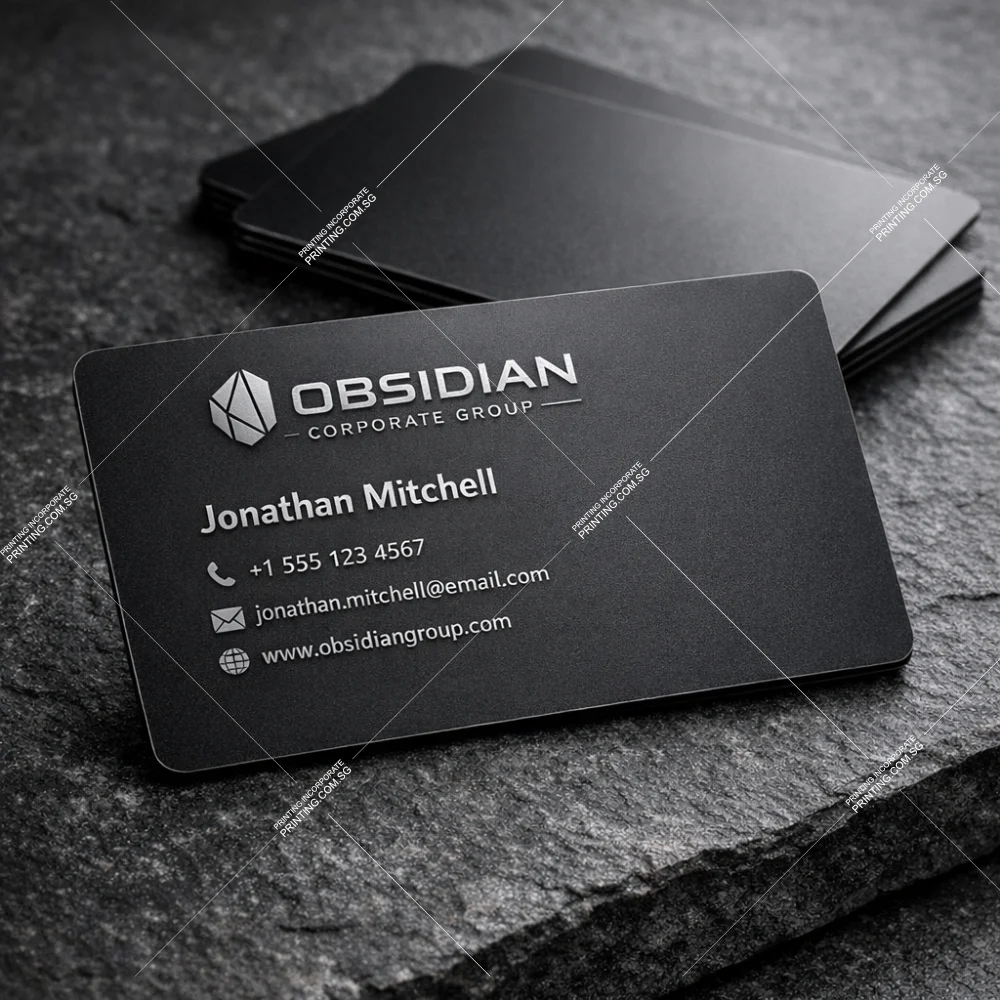











Metal Business Cards for Premium Branding
Metal business cards provide a distinctive alternative to conventional paper or plastic cards. Their weight, texture, and visual appearance create a strong physical presence when exchanged during meetings or networking events.
Because metal cards are resistant to bending, tearing, and surface wear, they are suitable for long-term use and repeated handling. Materials such as stainless steel and aluminium provide durability while maintaining a refined appearance.
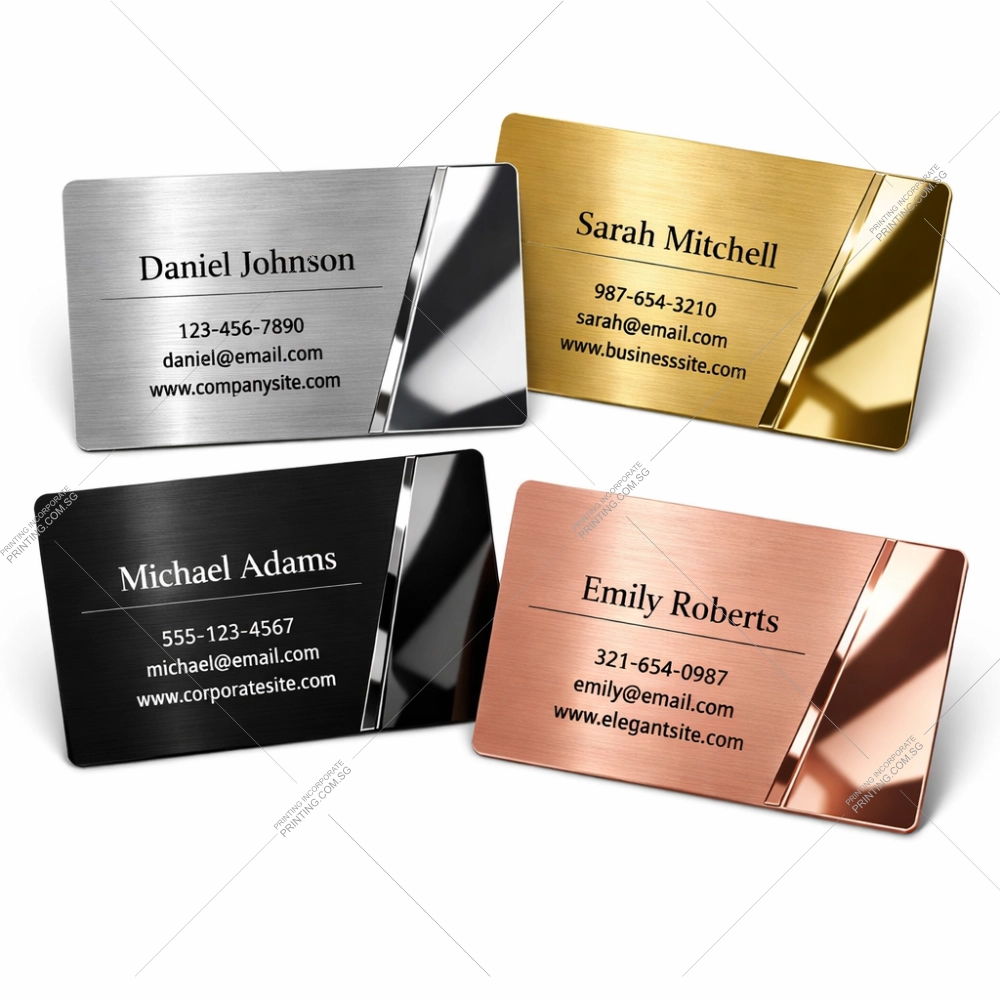
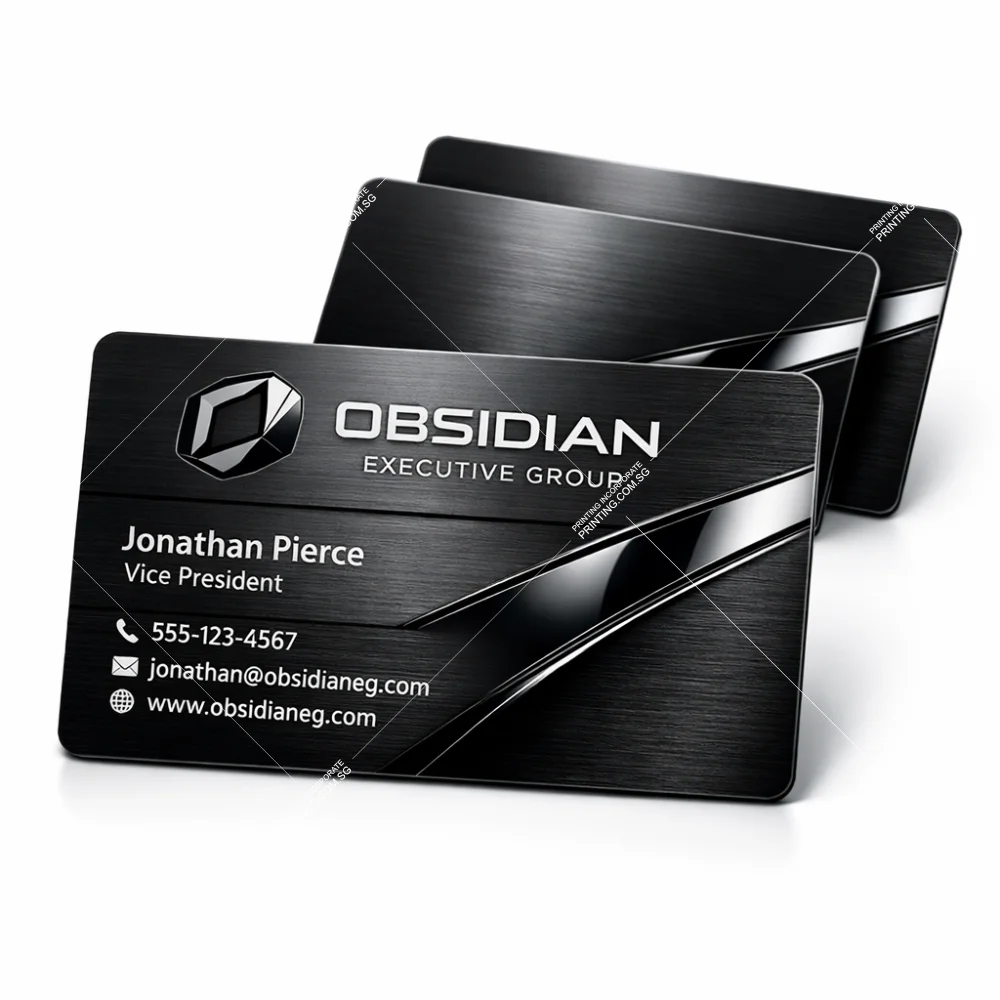
Businesses often choose metal cards when they want to emphasise brand positioning, exclusivity, or craftsmanship. Finishing techniques such as engraving, brushed textures, or metallic plating allow designs to incorporate both visual and tactile elements.
Materials for Metal Business Cards
Metal business cards can be produced using several types of metals depending on the desired finish and weight.
Common material options include:
Stainless Steel
A durable and corrosion-resistant material commonly used for engraved metal cards.
Aluminium
Lightweight and suitable for anodised colour finishes.
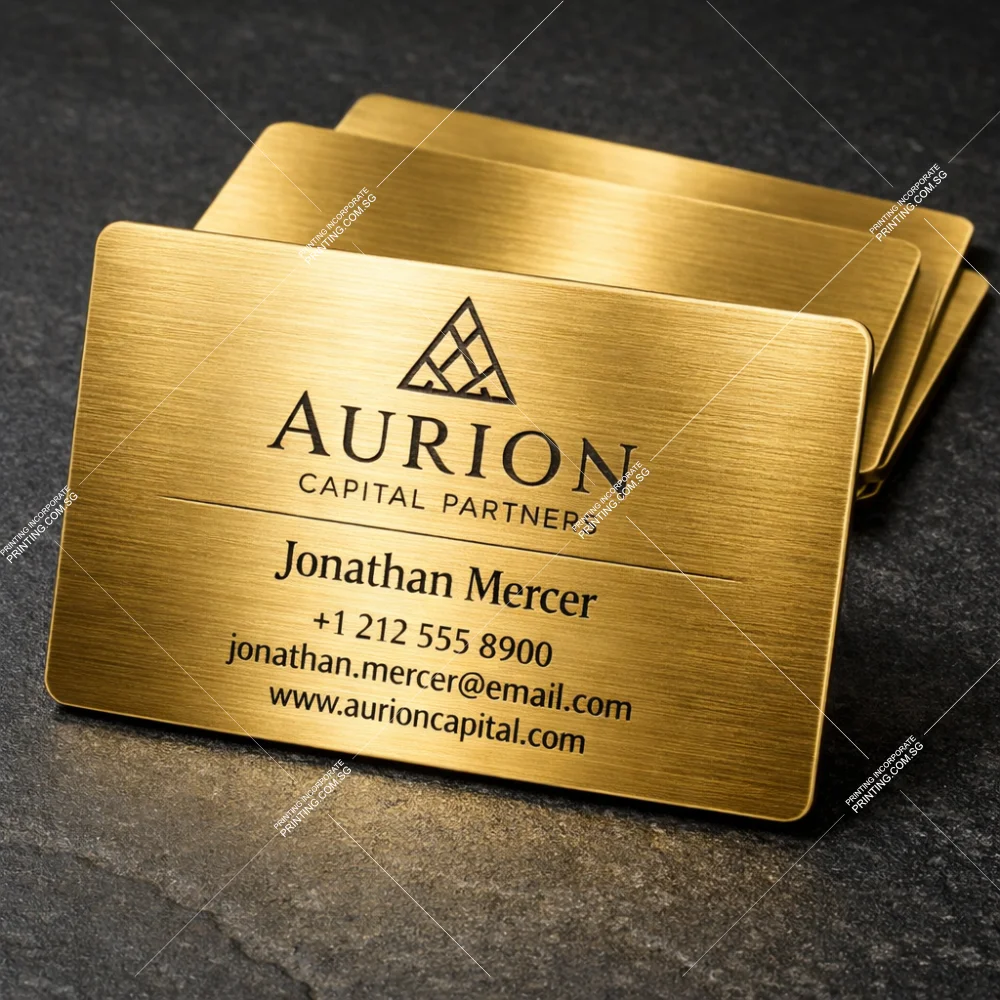
Brass
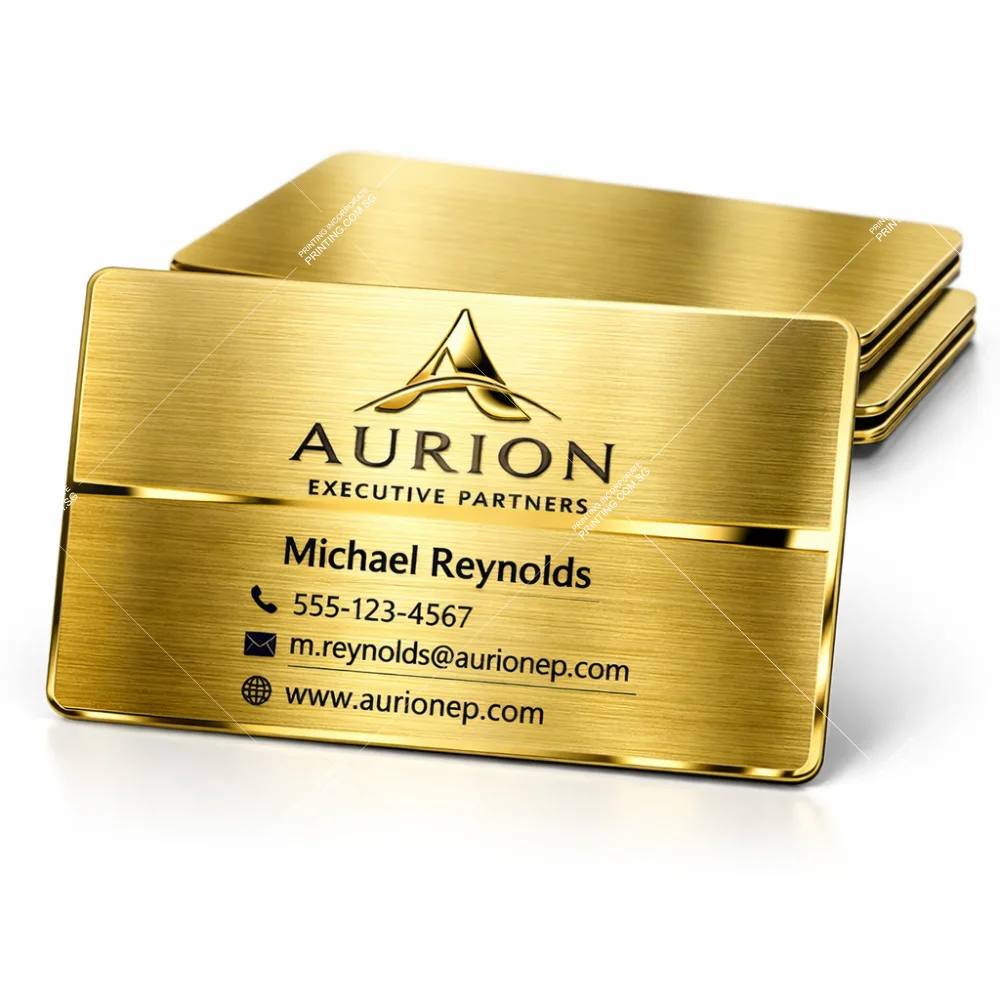
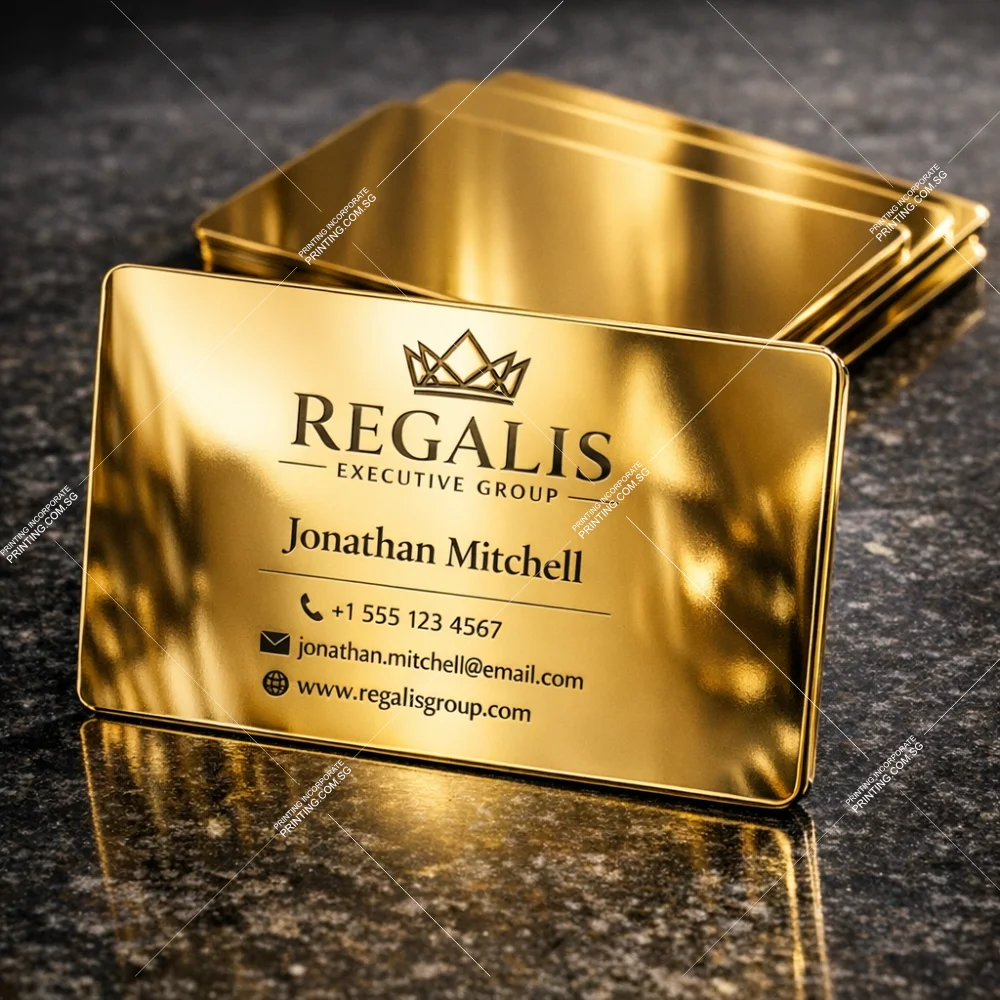
Provides a gold-tone appearance with strong visual contrast when engraved.
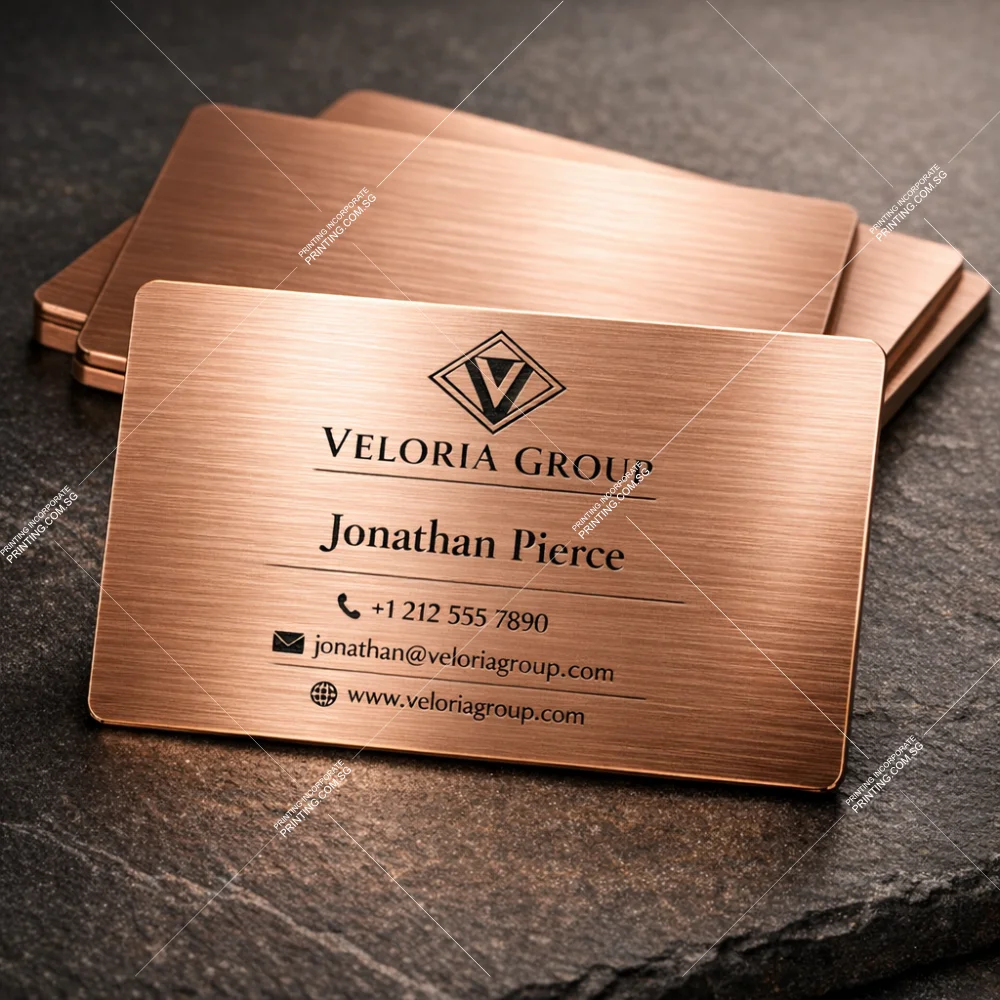
Copper
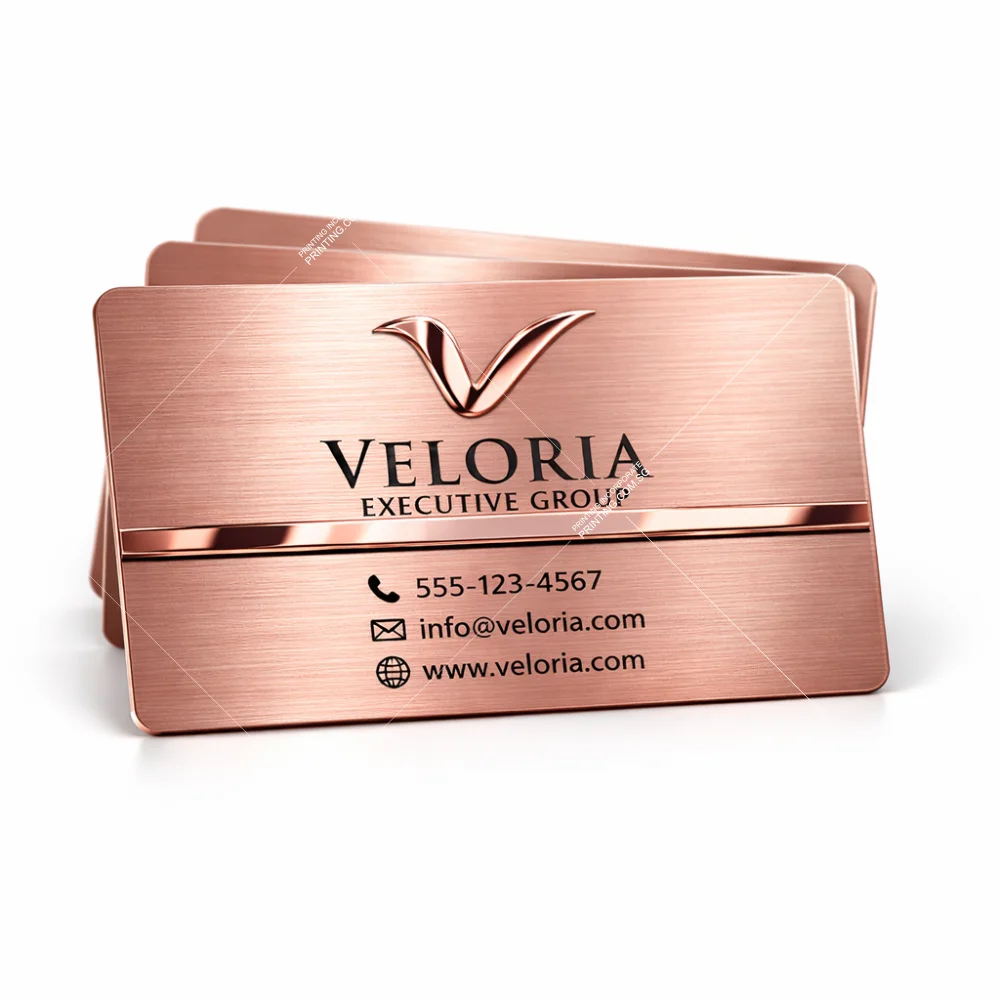
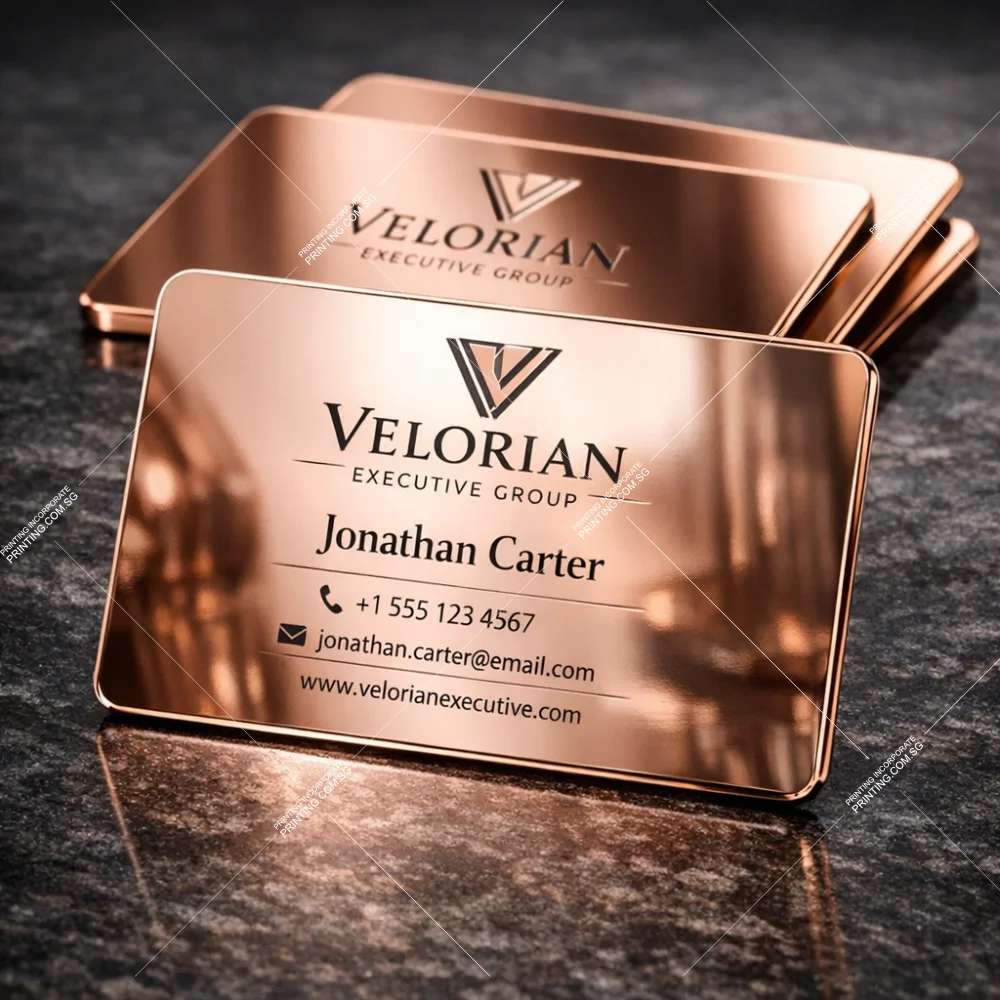
Creates a warm metallic tone often used for distinctive branding styles.
Material selection may affect card weight, colour tone, and finishing compatibility.
Thickness Options
Metal business cards are typically produced in thin metal sheets designed to maintain rigidity while remaining practical for storage in card holders.
Common thickness options include:
0.3 mm
Slim metal profile suitable for lightweight designs.
0.4 mm
Balanced thickness offering durability with manageable weight.
0.5 mm
Premium thickness with stronger rigidity.
0.8 mm
Heavyweight metal cards with substantial presence.
Thickness selection may depend on the selected material and finishing method.
Sizes & Formats
Metal business cards are commonly produced in the same dimensions as standard business cards for compatibility with wallets and card holders.
Common sizes include:
86 × 54 mm
Standard credit-card size widely used for professional networking.
90 × 54 mm
Slightly wider format sometimes used for international card layouts.
Custom Sizes
Custom dimensions may be available depending on production methods and design layout.
Production Methods & Surface Finishes
Metal business cards are produced using specialised manufacturing processes depending on the design, material, and finishing requirements. These techniques allow detailed designs, precision markings, and distinctive surface appearances.
Production Methods
Common production methods include:
Laser Engraving
Creates permanent markings by removing material from the metal surface using precision laser technology.
Chemical Etching
Produces recessed text or graphics by chemically removing selected areas of metal.
Laser Cutting
Allows intricate cut-through patterns, custom shapes, or decorative design elements.
Silkscreen Printing
Applies solid colour inks onto the metal surface for logos, text, or simple graphic elements.
UV Printing
Digital printing technology used to apply full-colour graphics onto metal surfaces.
Surface Finishes
Metal business cards may also feature different surface finishes to achieve specific visual and tactile effects.
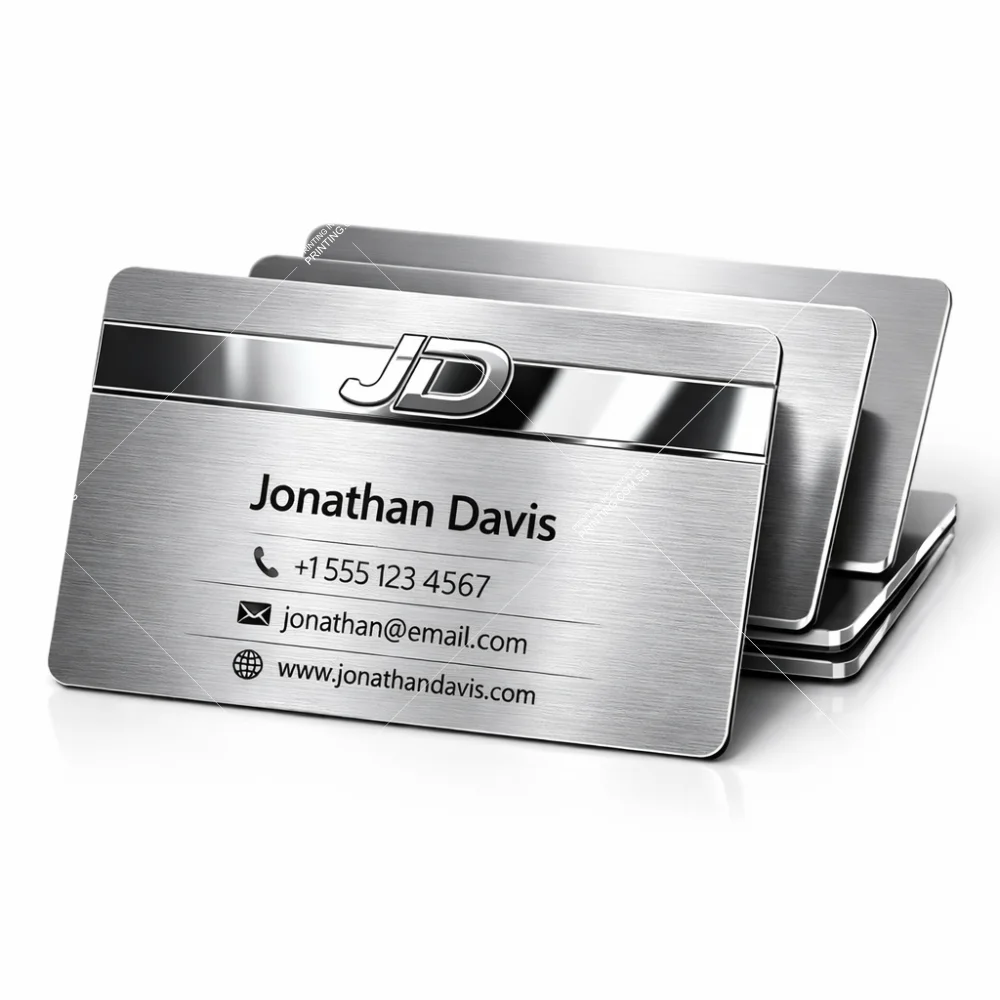
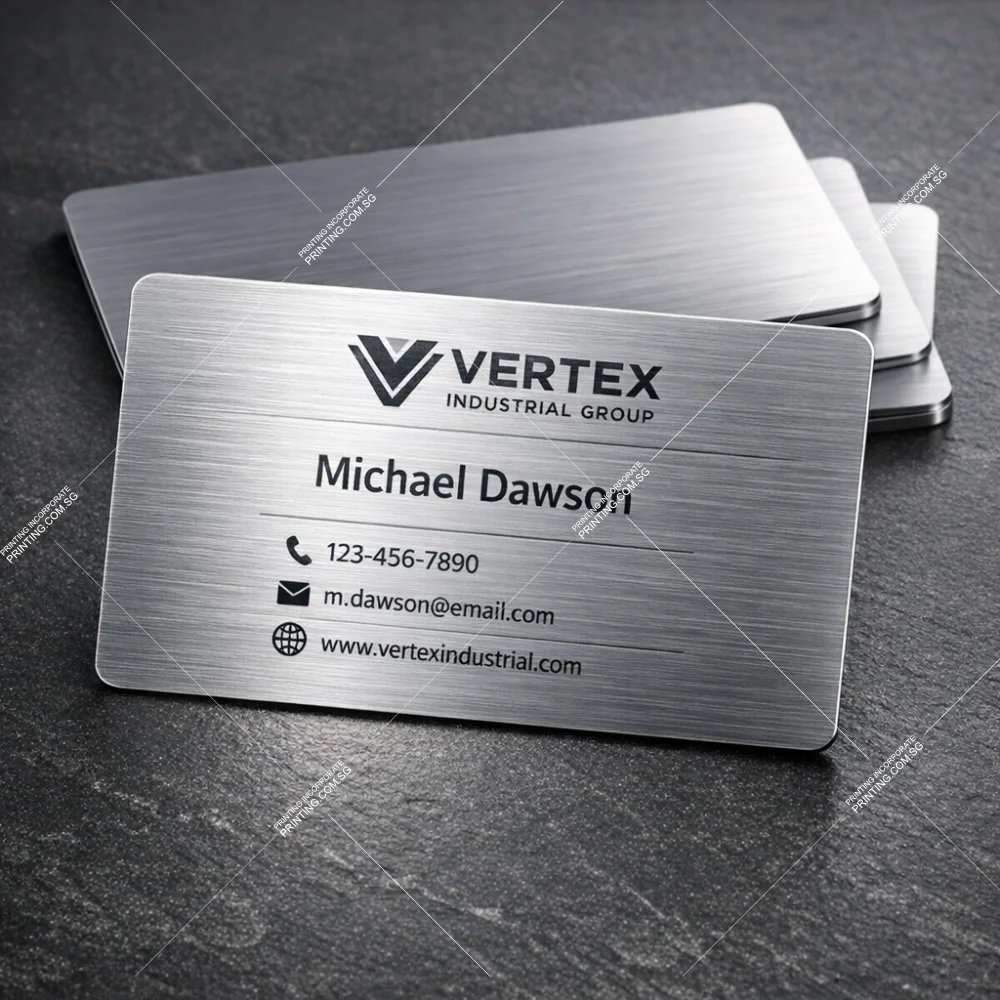
Brushed Metal Finish
Creates a directional metal texture that gives a refined and modern appearance.
Anodised Colour Finish
Adds coloured metallic surfaces, commonly used with aluminium materials.
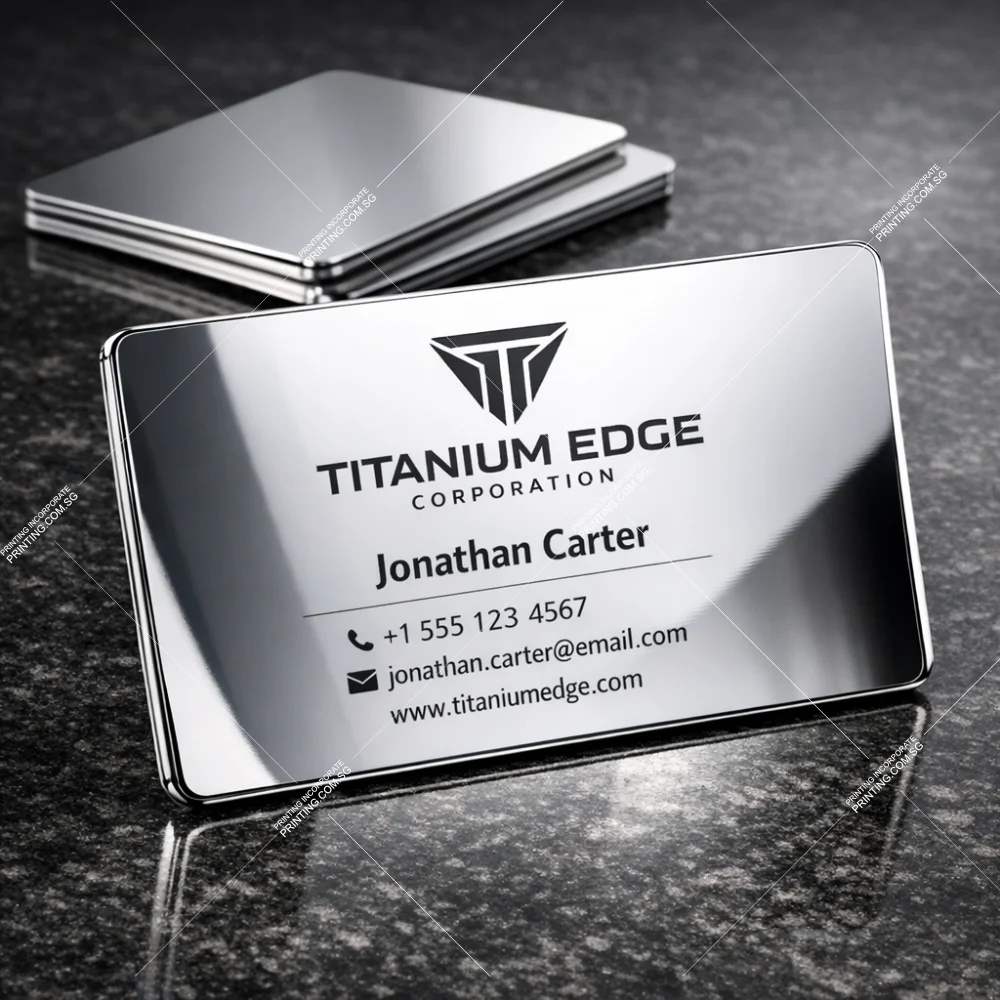
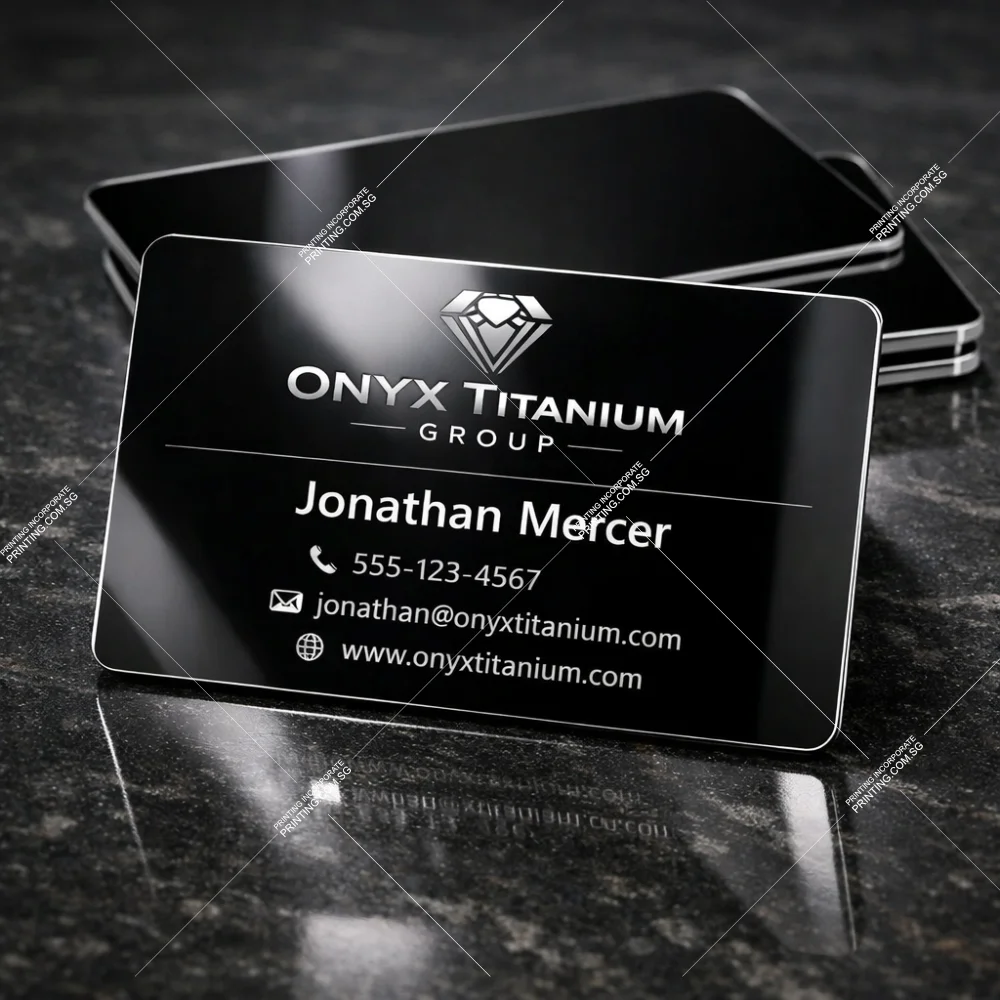
Mirror or Polished Finish
Produces a reflective surface with strong visual contrast.
Some metal business card designs may involve a combination of production methods and finishes depending on the artwork and desired final appearance.
Premium Add-On Finishing Options
Additional finishing options may be available for specialised projects.
Examples include:
Laser Cut Patterns
Cut-through elements or decorative shapes within the card design.
Plated Metal Finishes
Gold, silver, black, or rose gold plating.
Custom Cut Shapes
Non-rectangular card designs.
Sequential Numbering or Barcodes
Identification numbers or tracking codes.
Magnetic Stripe or Signature Panels
Functional elements for specialised card uses.
Availability of these features may depend on production feasibility and order quantity.
Common Uses for Metal Business Cards
Metal business cards are commonly used for:
Executive business networking
Luxury brand presentation
Financial and investment services
Architecture and design professionals
Technology companies
Exclusive membership cards
High-end corporate branding
Their distinctive material and production methods make them suitable for situations where presentation plays an important role.
Turnaround Time
Production turnaround for metal business cards typically ranges from 3–4 weeks after artwork approval, depending on material selection, finishing techniques, and order quantity.
Production timelines may vary based on design complexity and specialised finishing requirements.
Why Choose Metal Business Cards
Metal Business Cards provide a distinctive alternative to traditional paper cards by using durable metal materials such as stainless steel, aluminium, brass, or copper. Their rigid structure and precision production methods create a unique tactile and visual presentation.
Production techniques such as laser engraving, chemical etching, and laser cutting allow detailed designs and intricate patterns to be incorporated into the card.
Metal Business Cards are suitable for professionals and organisations that require durable, high-impact cards designed for long-term use and distinctive brand presentation.
Business Card Design Tips
Proper design ensures your business cards print clearly and look professional.
View our full Business Card Design Guidelines for layout, colour, and font recommendations.
FAQs – Metal Business Cards
What are metal business cards?
Metal business cards are networking cards produced using thin metal materials such as stainless steel, aluminium, brass, or copper. They are engraved, etched, or cut to display contact information and branding.
Are metal business cards durable?
Yes. Metal cards are resistant to tearing, bending, and surface wear, making them more durable than traditional paper cards.
Can metal business cards include cut-out designs?
Yes. Laser cutting allows sections of the card to be removed to create patterns, shapes, or negative space elements.
What thickness is recommended for metal business cards?
Common thicknesses range from 0.3 mm to 0.5 mm, offering a balance between durability and practicality.
Can metal business cards be printed in colour?
Colour effects are typically achieved using anodising, plating, or surface coating rather than traditional ink printing.
Are metal business cards compatible with card holders?
Yes. Most metal cards are produced in standard business card sizes such as 86 × 54 mm to fit standard wallets and holders.
What file format should be submitted for production?
A vector file such as AI, EPS, or PDF is recommended for engraving and cutting processes.
What is the minimum order quantity?
Minimum quantities may vary depending on production method and finishing options.
Reviews
There are no reviews yet.