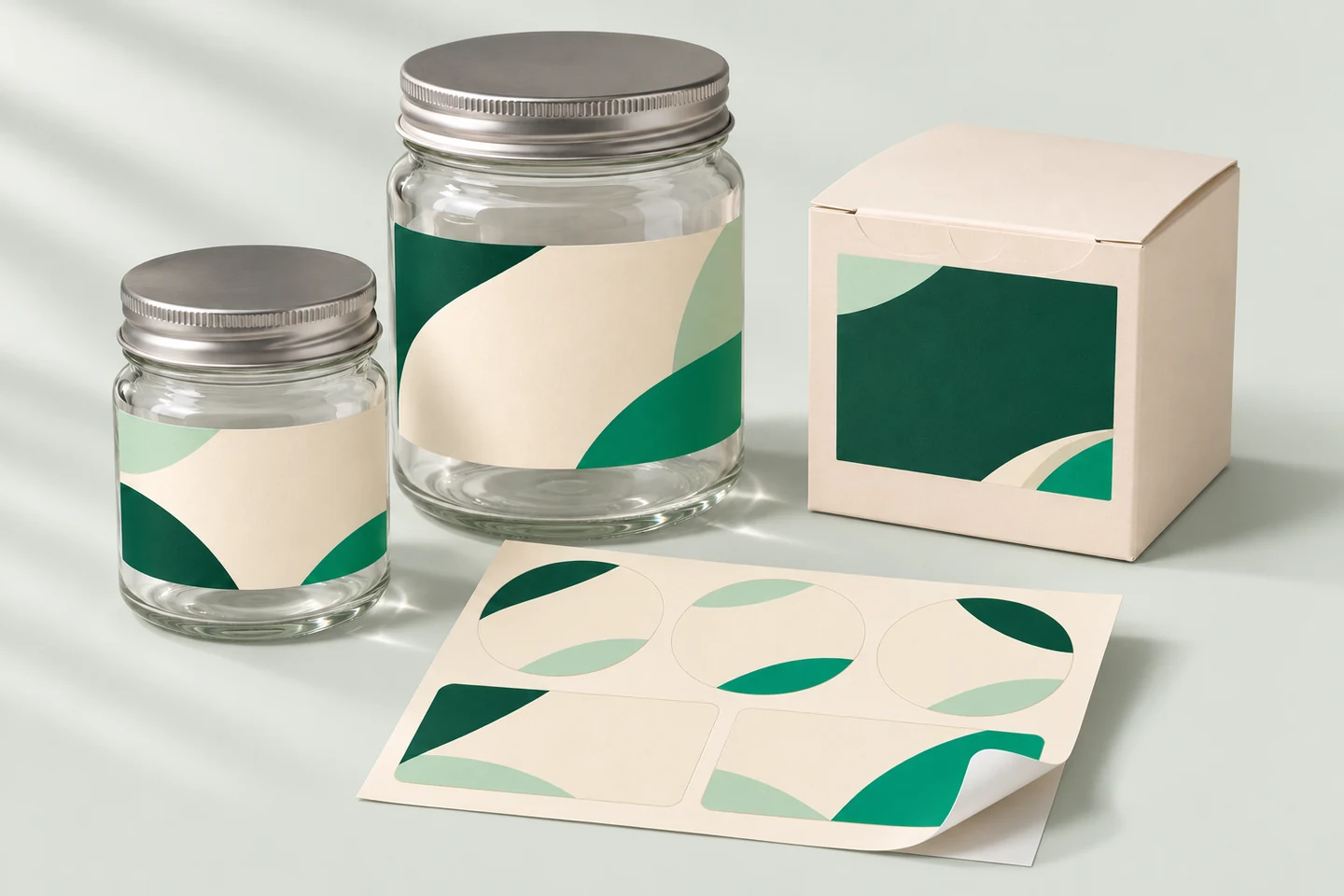
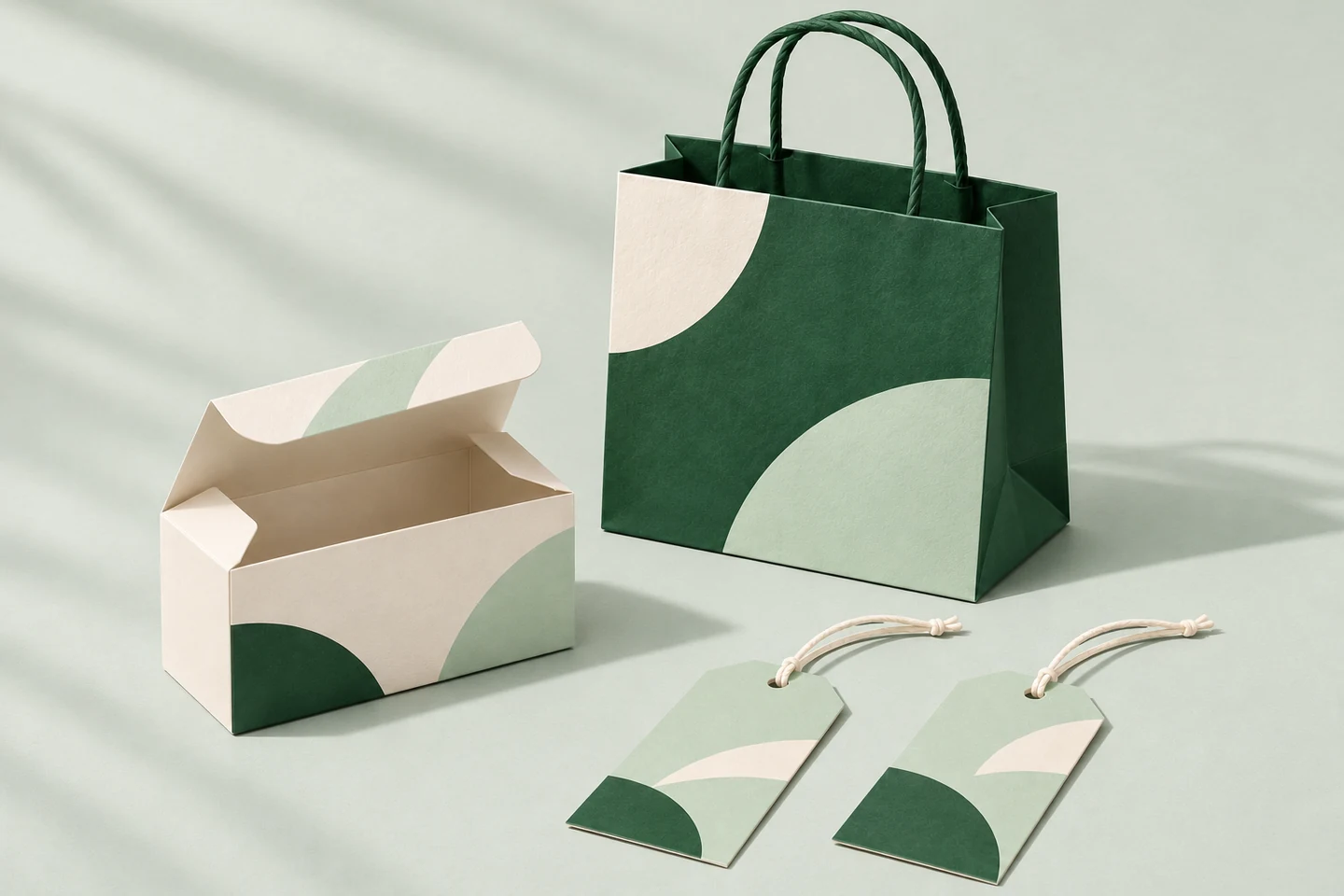
Packaging has to fit, carry and present a real object. A visually attractive mock-up cannot confirm those requirements on its own. Start with the product and its journey, then work towards the material, construction and printed design.
Measure the product and explain the packing
Provide the item's dimensions, weight and shape. State whether one package holds a single item, several items or an item with accessories. Include any protective wrapping or insert that takes up space.
Make clear whether a dimension refers to the product, the inside of the packaging or its outside. A sample is especially useful for irregular objects. Avoid treating a close-fitting screen drawing as proof that the final item will fit.
Choose the format around its task
| Format | Main question | Useful information |
|---|---|---|
| Custom boxes | How should the item fit, open and stay in place? | Product dimensions, contents, insert and closure needs. |
| Paper bags | What must the customer carry? | Combined dimensions, weight and handle requirements. |
| Hang tags | What information must remain attached? | Attachment point, tag size, hole position and variable details. |
Explain the conditions of use
Describe handling, storage and how the package will reach the customer. A presentation box used indoors has different demands from packaging expected to experience moisture or transport. Tell the team about sensitive contents or special compliance requirements before materials are proposed.
Do not assume that a printed material is suitable for direct food contact, heavy loads or prolonged outdoor use. Those requirements need assessment for the actual material and construction.
Confirm construction before final artwork
Agree the dimensions and dieline before placing the final graphics. Check folds, flaps, glue areas, holes and any windows or inserts. Build the design around the template so text and images remain in the correct positions when assembled.
Where fit or function is critical, discuss which sample or dummy is appropriate. A plain structural sample answers different questions from a printed colour proof.
Finish the brief with practical details
- Quantity for each size and design.
- Printing on the outside, inside or both where applicable.
- Material, finish and any important brand references.
- Whether items should arrive flat or assembled.
- Packing, delivery destination and required arrival date.
Use the quotation enquiry to send these details together. A clear brief lets the price reflect the packaging that will actually be made.