A label can look right on a screen and still be unsuitable for the surface it needs to stick to. Begin with the container and its conditions of use. The face material, print, finish and adhesive need to work together for that particular application.
Describe the actual surface
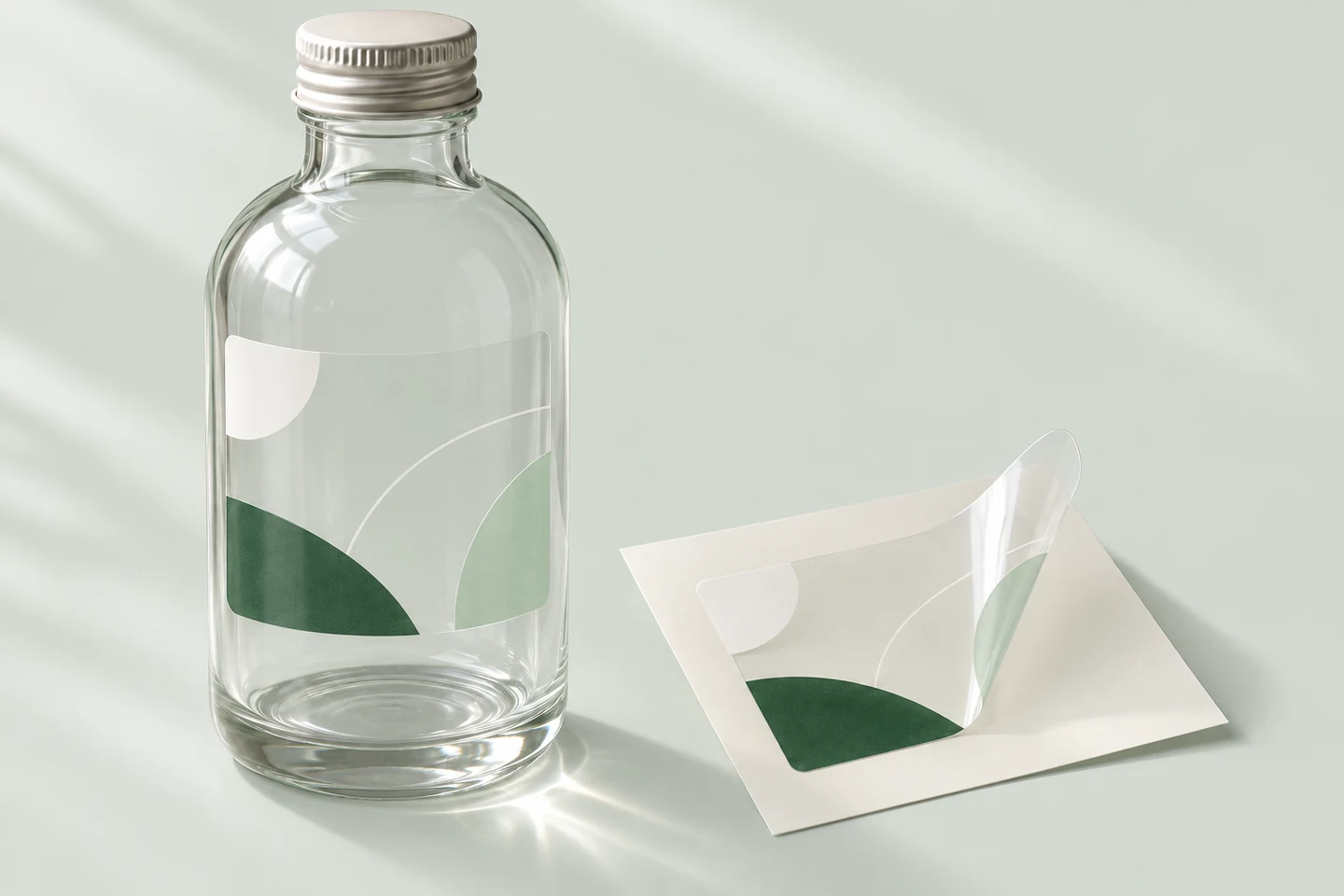
Identify the container material, shape and texture. A smooth flat box differs from a curved bottle, a flexible pouch or a textured surface. Provide dimensions or a sample where the fit is important.
Tell the team whether the label will be applied to a clean, dry surface and whether that surface is warm, cold or likely to collect condensation. Application conditions can differ from the conditions the labelled item experiences later.
List what the label will encounter
Consider moisture, refrigeration, sunlight, rubbing, oils and cleaning. A water-resistant face material does not automatically establish the performance of the adhesive, printing or finished label. Explain the whole use case rather than asking only for a “waterproof sticker”.
If removal matters, describe when the label will be removed and whether residue is acceptable. Do not assume a removable label behaves identically on every surface or after every storage period.
Choose a shape and size that can be applied
Check the label on the real container. Avoid placing critical wording over a sharp curve or where an edge may be repeatedly handled. Leave space for production tolerances and consider how neatly staff can position it.
For transparent labels, the container and its contents influence the appearance of the print. Discuss any opacity or white-ink requirement through quotation rather than assuming it is included in standard CMYK printing.
Match the supply format to the task
Loose pieces, sheets and rolls suit different handling methods. If labels are applied by machine, provide the applicator's requirements, including roll direction and relevant dimensions. For hand application, think about access to the label edge and the working space available.
Prepare a useful test and specification
- Actual container material, dimensions and sample.
- Application and storage conditions.
- Expected exposure, handling and intended lifespan.
- Permanent or removable requirement.
- Finished label size, shape and quantity per design.
- Supply format and any machine-application requirements.
Where performance is important, discuss a trial on the actual surface under realistic conditions. Compare Custom Label Stickers and Waterproof Label Stickers, then confirm the complete specification before committing to a large run.