An exhibition brings several printed items into one small space. They should work together, but they do not all need to say the same thing. Plan what a visitor needs from a distance, during a conversation and after leaving the stand.
Start with the venue information
Confirm the stand dimensions, permitted display positions, access times and any organiser requirements. Check ceiling height, furniture placement, power points and areas that must remain clear. A large graphic can be effective in a mock-up yet hidden behind a table in the actual stand.
Identify who receives deliveries and where packaging can be stored. Event venues may have specific receiving windows, loading arrangements or access procedures. Include those details when discussing delivery.
Give each item a clear job
| Moment | Useful printed material | Main task |
|---|---|---|
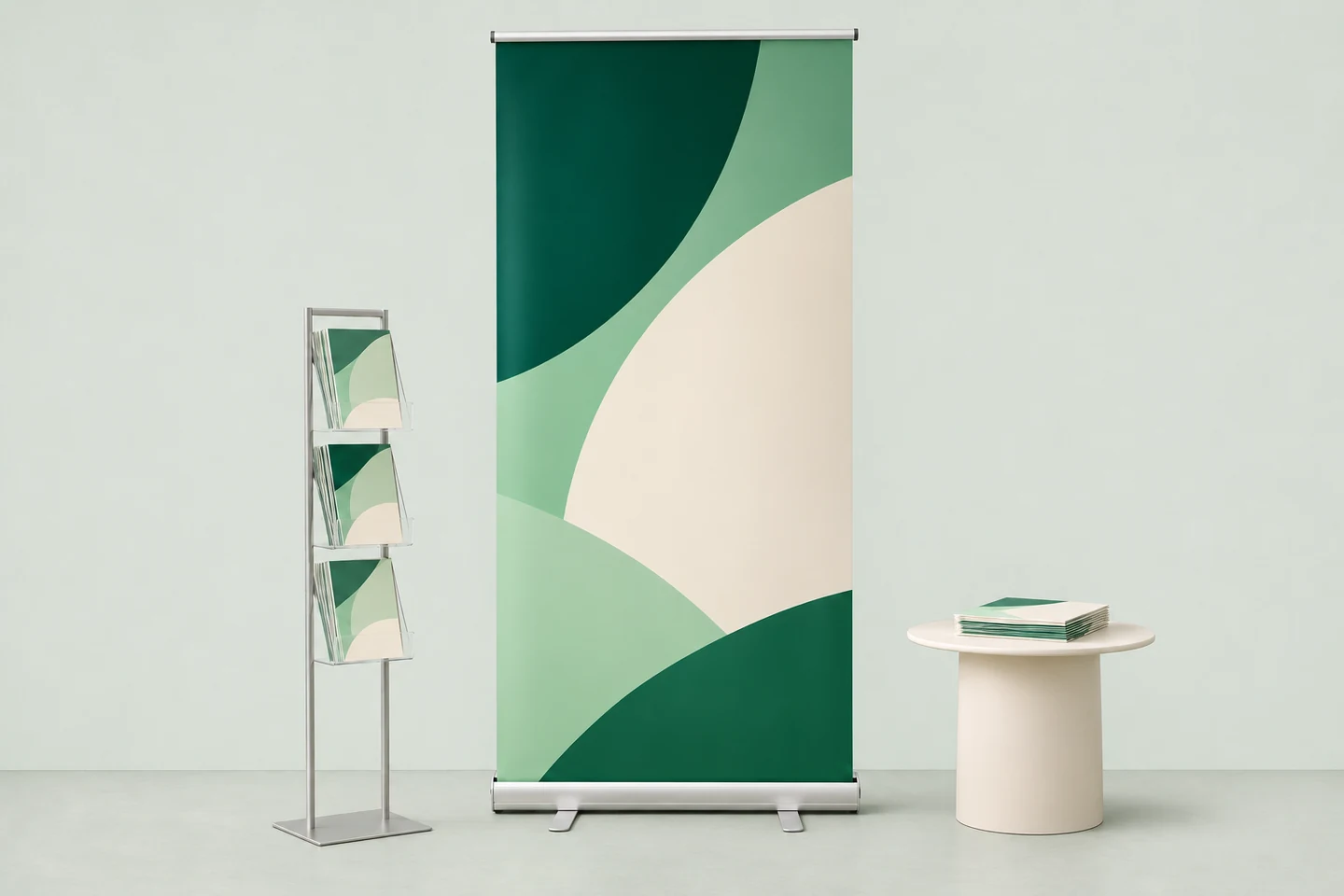
| Approaching the stand | Banner or large display | Identify the business and its main offer. |
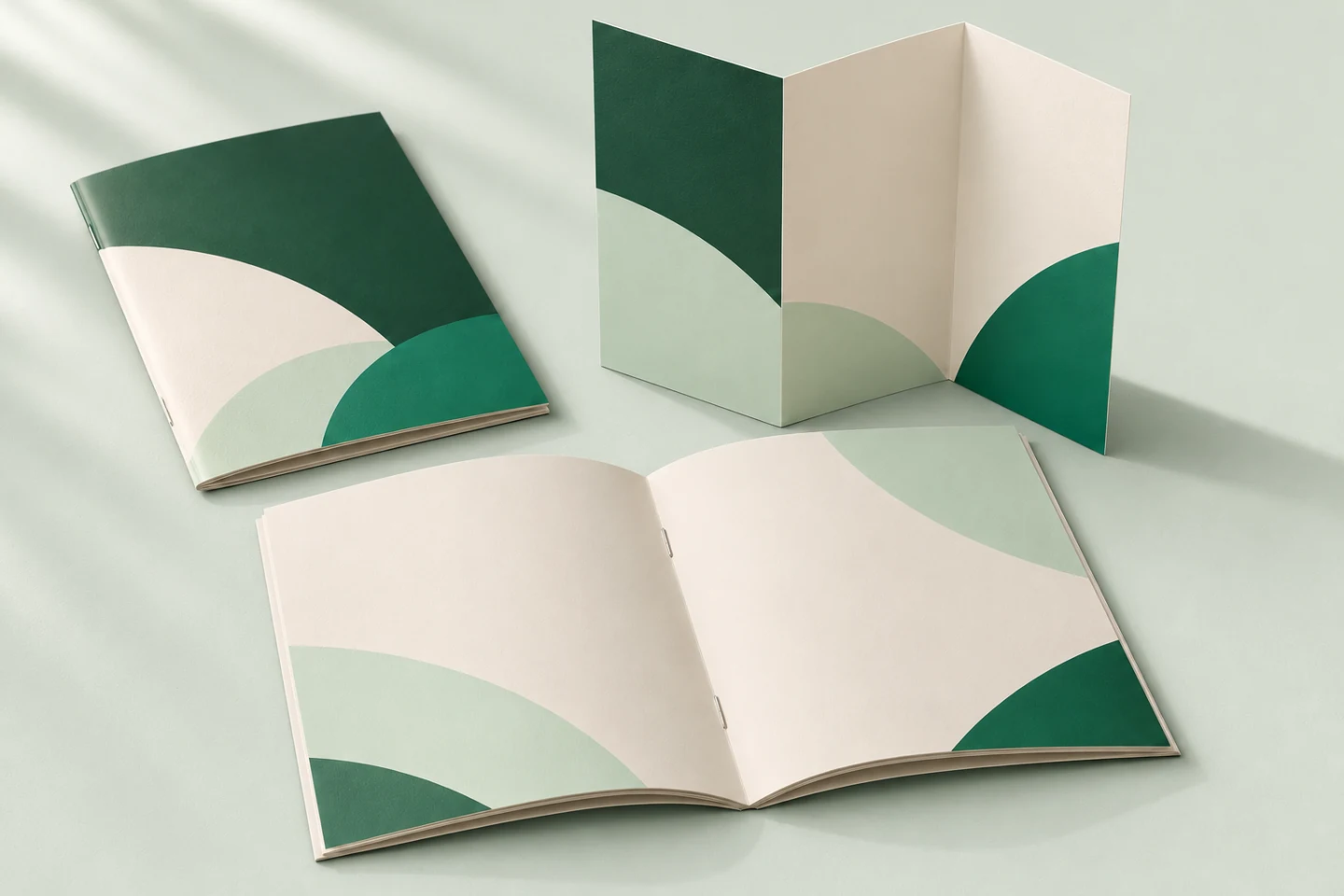
| Having a conversation | Brochure, product sheet or folder | Support the information being discussed. |
| Leaving the stand | Business card or compact handout | Make the next contact easy. |
Keep distant-view graphics simple. A long service list belongs in a handout rather than becoming small text on a banner.
Coordinate the artwork without repeating it
Use a consistent logo, colour approach and typography. Adapt the layout to each format, rather than stretching one design to fit every product. Check the visible area and template for roll-up banners, including the portion affected by the display mechanism.
For brochures, choose a manageable amount of information and a useful contact route. Confirm that the finished size fits the selected holder.
Plan quantities and packing
- Estimate handouts from the audience and distribution plan.
- Separate staff materials from visitor giveaways.
- List quantities for each design or language.
- Label cartons by contents and destination.
- Keep a sample and spare essential contact materials accessible.
- Plan transport and storage after the event.
Work backwards from arrival
Allow separate time for artwork completion, proofing, production, finishing, packing and delivery. An event date is not the same as a dispatch date. Ask for the actual schedule and clarify any urgent requirements before approval. The event printing guide provides further planning considerations for the full project.